


Jo Caird visits Spain’s Costa Brava and discovers why CMAS is using the Mediterranean hotspot for its annual underwater photo contest.
Words by Jo Caird
It’s early when I arrive at the harbour in L’Estartit on Catalonia’s Costa Brava, northeastern Spain, but it’s already a hive of activity.

As the sun rises over the Illes Medes, a petite archipelago of seven islets that sits around 1km off the coast, dozens of people buzz about making last-minute checks of cameras, memory cards, housings and strobes before loading their gear into the waiting dive boats.
It’s the first day of the CMAS Underwater Photography and Video World Championship 2025, as well as the inaugural CMAS Para Underwater Photography and Videography World Cup, the equivalent competition for disabled divers.
Logistical considerations prevent me from observing the actual competition over the two days of the contest, so I’m doing the next best thing: diving some of the same sites myself to get a feel for what the contest’s photographers and videographers are experiencing.
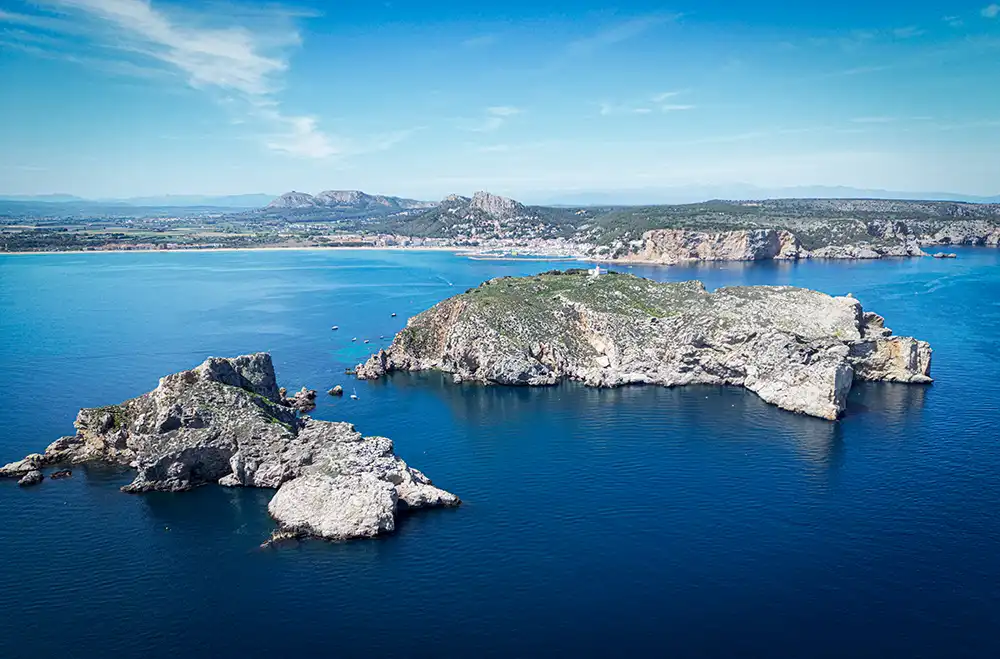
First up is Pedra de Déu (Rock of God), on the north side of the Illes Medes. It’s a beautifully calm day, but chilly in the shadow of the main island, as I suit up for the first dive of the trip.
The para competition boat bobs on the water at the next site along, its four teams (comprising one photographer and support diver each) already underwater by the time we drop anchor.
The two photography boats and the videography boat from the main competition, carrying 19 national teams from across Europe and as far afield as Chile, are already out of sight around the other side of the islands.
There’s not much to see at first, as I follow a wall down towards a pinnacle that marks the tip of the island, then all of a sudden at around 20 metres I come across a forest of brightly coloured yellow and purple gorgonian corals.
Known as the violescent sea-whip (Paramuricea clavata), they make for an almost incongruous sight compared to the otherwise rather muted palette of this seascape, a taste of the tropics right here in the Mediterranean.
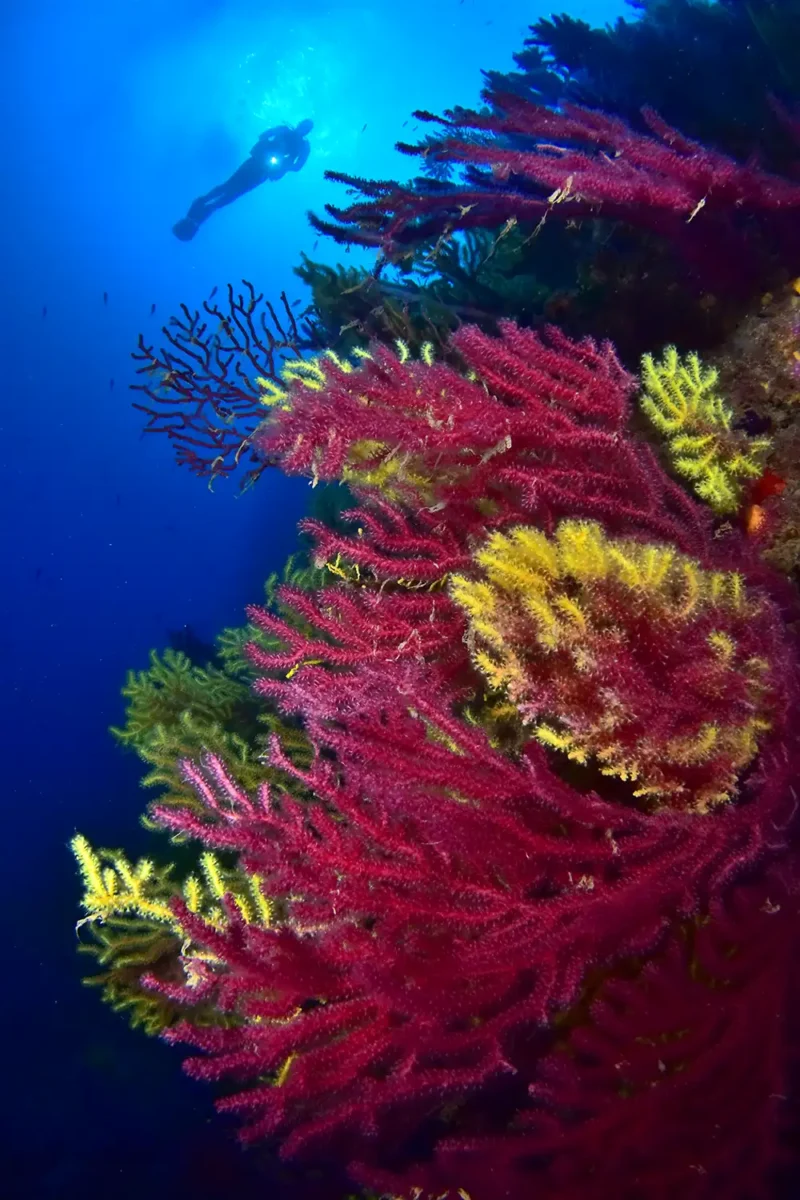
My guide tells me the gorgonians used to be found in greater numbers and at shallower depths too, at this and other dive sites all over this area, but a series of marine heatwaves has gradually restricted their range.
Local dive centres can’t do anything about the temperature of the water but they’ve long played a significant role in supporting the marine environment here.
The Medes Islands Marine Reserve, one of Spain’s first, was created in 1983 after dive operators began noticing a decline in the abundance and size of fish in the area.
There is no longer any fishing allowed at all in the main reserve area and only a very limited amount of licensed, artisanal fishing in the wider park. The result is that, warming seas notwithstanding, the area is a biodiversity hotspot.

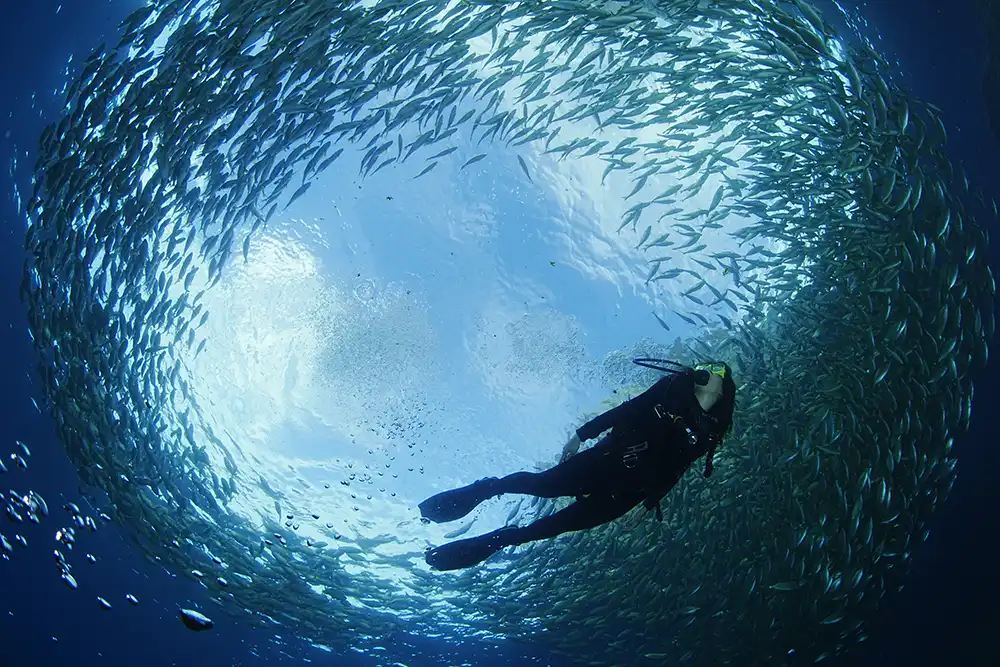
At Pedra de Déu, as well as at Les Farranelles and Roca L’Escribana, two of the many other dive spots around the Medes Islands, I find myself surrounded by large shoals of barracuda, amberjacks and zebra sea bream.
Enormous scorpionfish hide in plain sight, while moray eels skulk awkwardly on the reef and snakelocks anemones flutter in the gentle current.
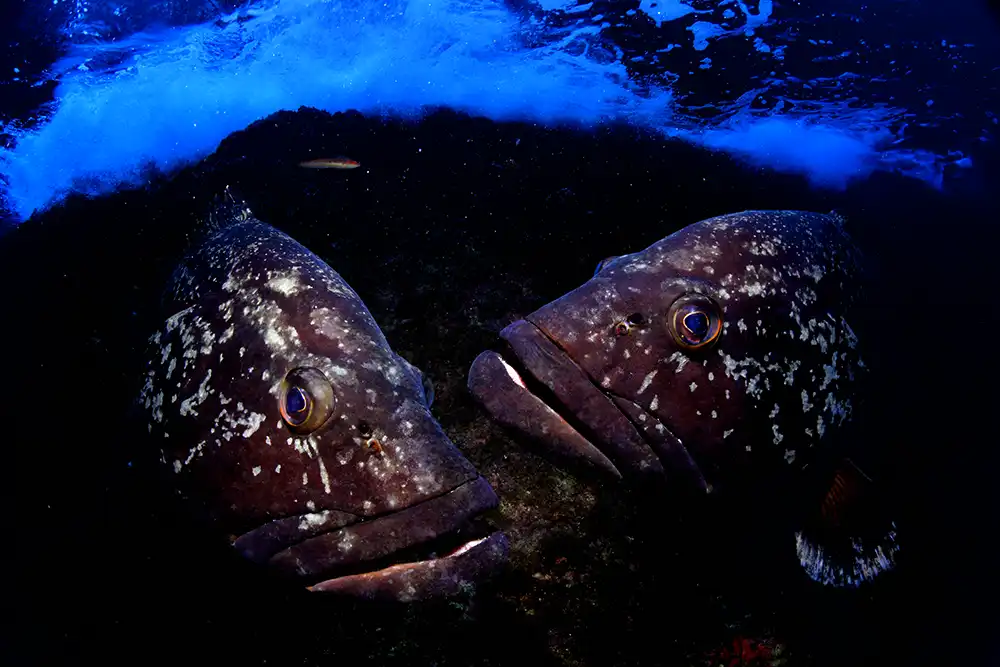
The real stars of the show, however, are the enormous dusky groupers that patrol the reef. Up to a metre long and unperturbed by the presence of divers after a lifetime spent sharing the water, they are hugely charismatic.
The largest individuals demonstrate their dominance by raising the spines that line their dorsal fin, seeing off smaller fish that deign to come too close.
The older groupers in particular have so little fear of divers, explained my guide, because it used to be common practise to feed them. Feeding is no longer allowed, but you use a white-coloured regulator at your peril, apparently, at risk of having a grouper mistake it for a boiled egg, their favourite snack back in the day.
At this event, the ‘Theme’ category of the CMAS contest is dedicated entirely to the groupers, which are something of a mascot for L’Estartit’s dive centres, many of whom are involved in supporting the national teams.
Unlike most other competitions, photos in this and the other six categories (Wide-angle, Model, Smart, Fish, Close-up and Creative) are submitted entirely unedited.
The rules of the competition state that photographers must hand over their camera’s memory card directly to the judges at the end of each of the two days of diving. Their camera housing must not be opened until that point, not even for a battery change, without the supervision of a judge.
I don’t witness this elaborate procedure myself because, after a couple of dives on the Medes, I’m whisked away from L’Estartit to experience what else this coastline has to offer.
An hour and a half north of L’Estartit, on the other side of the expansive Gulf of Roses, is the Cap de Creus, a stunningly beautiful peninsula of historic hand-built olive terraces, rugged cliffs and secluded white sand bays.
The highway gives way to a tortuous and breathtaking drive on an unpaved road that brings us to Cala Jóncols, where a small dive centre sits alongside a family-run boutique hotel.
We head to Cap Norfeu, at the end of the Cap de Creus peninsula, to a rock that locals say looks like a cat, then descend and circle a pinnacle in the best visibility I’ve had on the trip so far.
The groupers here are just as gigantic as at the Medes but they’re considerably more diffident – raising their dorsal spines at me and my guide, as well as at each other, when they feel their territory is compromised.

In addition to the glorious feeling of flying that comes with this excellent vis and spectacular topography, I’m gifted the close-up treat of several brightly coloured nudibranchs and some other unusual invertebrates that it’s beyond me to try to identify.
I’d like to stay a few days at Cala Jóncols and explore more of the dive sites tucked away beneath the cliffs of the Cap de Creus Natural Park, but another nearby marine area beckons, so instead I head south to the pretty town of Llafranc.
The wind has picked up overnight, so it’s a very bumpy ride out to Ullastre I, II and III, a trio of adjoining dive sites featuring a series of pinnacles that go down to between 30 and 50 metres
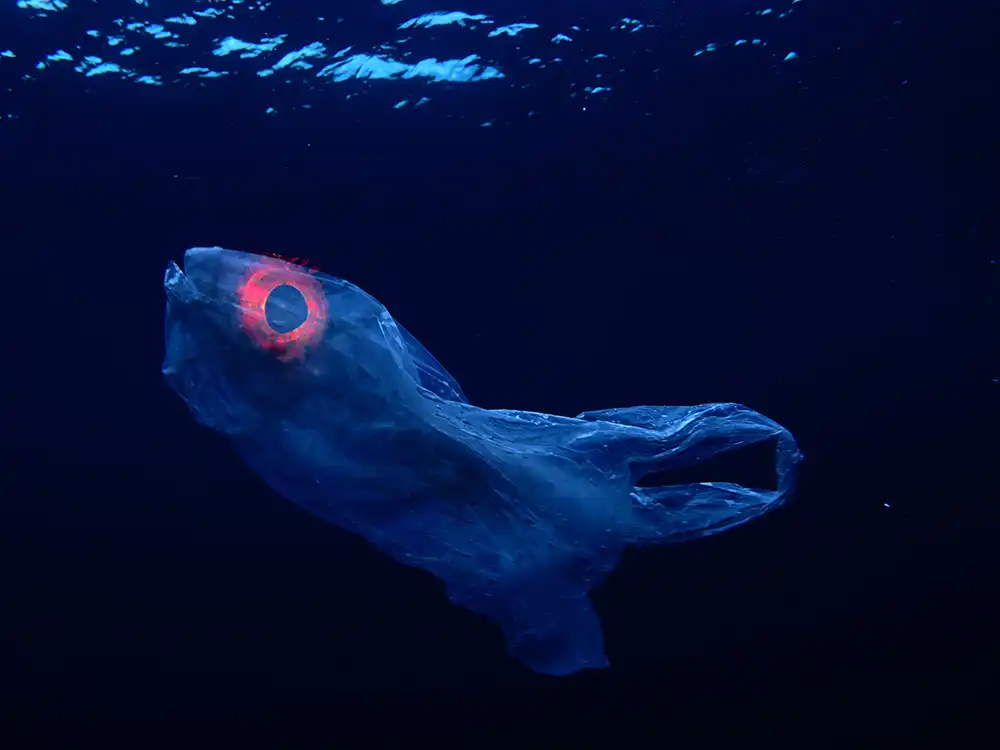
An artful composite image from the ‘Creative’ category highlights the dangers of plastic pollution.
Fast surface current makes for an exhausting swim to the buoy line, but the site – we begin with Ullastre III – is worth it: new perspectives on the seascape with each loop of what resembles a mini seamount.
In the lee of the current I have the leisure to peer into nooks and crannies in the rock, spotting Mediterranean morays through the clouds of damselfish that congregate here. Then, as I round the corner, the current picks up and I’m pushed along in a strong drift.

A huge shoal of magnificent bonito appears just at this moment – watching them while adjusting my swimming pace and buoyancy in response to the current takes all my concentration.
My guide wants to show me a glimpse of neighbouring Ullastre II, so we swim hard against the current for a while in that direction until the four smaller peaks of the site come into view.
I’m too low on air to get all the way across, but the experience works effectively as a teaser for the afternoon’s dive. We return to the pinnacles after a walk along the pine tree-lined cliff top and a slap-up lunch in the town square overlooking the harbour.
The current is even stronger in the afternoon, but I’ve got the measure of it by now and spot all sorts of marine life as I encircle the rocks: blue encrusting and pink tube sponges, feather duster worms, an enormous white nudibranch and more.
How my fellow divers managed to take photos in those conditions is beyond me (I’m not a photographer myself), but I was very glad to see the fruits of their labours back at the hotel that evening.
There are more visual delights to come the following day, and the last of my trip, at the award ceremony to mark the end of the CMAS competition.
As all the winning images and videos are projected on a huge screen in the community hall in L’Estartit, the photographers and videographers and their support teams cheering wildly all the while, I’m taken back to my own experiences underwater this week.
The groupers’ downturned mouths and characterful eyes, the vibrant colour of the gorgonians, the frenetic energy of large shoals of silver-sided fish. I clap and whoop with the rest of the crowd and start to plot out in my head when I’ll be able to return to dive these waters.
For more information about Costa Brava diving, visit costabrava.org/diving. For more on the CMAS World Cup and World Championship photo competitions, head to cmas.org/visual-events.

- Grouper Think – why Costa Brava is perfect for a CMAS photo competition - 11 August 2026
- ‘Machine learning’ – an interview with Blue Machine author Helen Czerski - 12 August 2025
- Volcanic diving in Tenerife’s dramatic seascape - 15 January 2024
More great reads from our magazine
- Neighbours of the North Wall – life among Sund Rock’s wolf eels
- My Octopus Mother – a life-changing encounter in the Emerald Sea
- Making a splash – a judge’s eye view of the Dive Dauin photo splash-in
- The old man, the sea, and the son – a father and son’s diving journey to Galápagos
- Full Circle – Crowley’s return journey through 25 years of Sharm El Sheikh

Take out a year’s print and digital subscription from £23.99
(UK price, international postage extra)
