


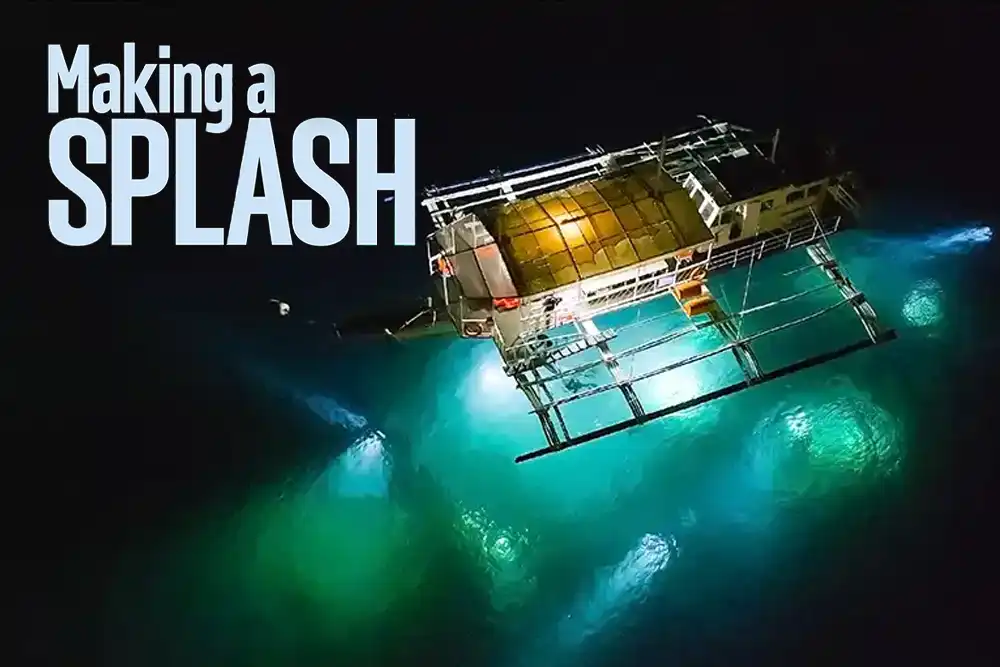
Jenny Stock heads to Dauin in the Philippines to experience the thrill of judging a Splash-In photo competition, with tips on how to get ahead if you enter
By Jenny Stock
I’m standing on a high stage in a large arena alongside a bejewelled dignitary, a smartly dressed compere and my three fellow judges. Before us, sat with bated breath, is a sea of two hundred captivated faces.
Fast-beating music begins to play as the tension builds. The pressure is palpable until, with an authoritative voice, the compere declares: ‘The winner of “best portfolio” is… Ponnie Jarasskul!’
The crowd goes wild. Ponnie, grinning widely, sprints to the stage. A supportive body of dive guides, resort owners, sponsors, spotters, fellow competitors and VIPs cheer, whistle and whoop as her beautiful images of nudibranchs, flasher wrasse and feather stars are projected onto a huge screen behind us.
I love it. Crowds enthusing not for football stars, pop icons or royalty, but rallying for the niche practice of underwater photography. For me, it is a dream come true.

This is the Dive Dauin Festival Negros Oriental Underwater Photography and Video Competition, a ‘Splash-In’ contest where all submitted photographs must be taken within a predetermined time frame and within a limited geographic area.
Once the clock starts, competitors have 79 hours to capture the best possible images for the potential to win a maximum of ten first places within 20 available categories.
All skill levels are catered for, including a Beginners Class, Compact Class and the most advanced Open Class.
Photos can be taken anywhere along the coastline of Negros Oriental (the southern principality of the Philippines’ Negros Island), although most contestants are diving from one of the 40 resorts around Dauin.
Healthy rivalry exists between the resorts, and some enter teams to see which resort can bring home the most trophies.

The event culminates in a huge ceremony featuring traditional music, dancing, ornate decorations and local delicacies. Prizes total a value of US$10,000 and this year include DIVEVOLK underwater phone housings, scuba diving holidays, regulators, torches, strobes and cash. All entries are judged by a panel of expert photographers, which, this year, includes me.
I’m judging alongside three professional divers: Ram Yoro, pioneer of ‘Bonfire Diving’ (a night-diving technique where lights are placed on the seabed to attract nocturnal marine life); Boogs Rosales, a Filipino conservation storyteller and filmmaker; and Adrian Stacey, editor of Scuba Diver Magazine.

At the beginning of the week, having heard the registration process has secured exactly 100 entrants, and up to 1,000 photos are destined for our eyeballs, we sit down and discuss what we are, and definitely are not, looking for in the winning images.
What not to do
As a judge, it can be a challenge to ascertain whether a photograph captures a genuine occurrence or a manipulation.
The prestige of first prize has, unfortunately, motivated some photographers to engage in unethical practices, and my fellow judges and I swap tales of some of the worst we have witnessed.
Animals being forced out of hiding for an image, for example, or a crinoid shrimp being chased down the arm of a feather star for a better shot.

Photographers will sometimes reposition animals against a more striking background, such as a nudibranch being moved to a higher block of coral to obtain a black background on a night dive, or a Spanish dancer flicked into the water column in order to snap a ‘free-swimming’ shot.
Other examples of poor practice include starfish being cut up to lure harlequin shrimp into the open, and questions are raised about the use of live bait to capture ‘eating shots’. I once saw a photographer pull an old ketchup sachet out of his BCD to place next to a seahorse for a ‘conservation shot’.
There is a scale of malpractice. Personally, I have no qualms with unobtrusive, non-invasive techniques like gently blowing sand away with an air pump, for example.
One graphic story, however, left me feeling ill. Many years ago, a competitor was so keen to be the only photographer with an image of a pygmy seahorse that, when he finished shooting the tiny creature, he reached into its gorgonian fan and squished the poor animal out of existence. Shocking.
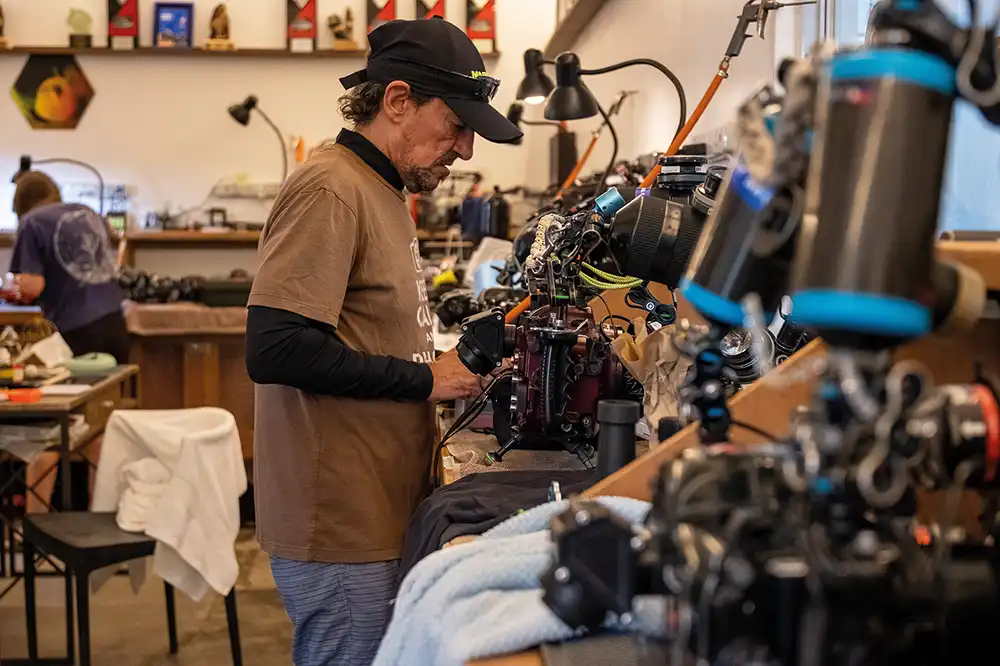
We’ve all witnessed genuinely eye-watering and bizarre things underwater, but I think and hope we have all evolved better practices over time (me included!).
Animals should be photographed in their natural environment, and less-stressed animals make for better images. If your subject is in an unphotogenic position, move on and find another.
You’ll find a better scene, even if it’s a less exotic creature, and won’t run the risk of being disqualified for malpractice.
It is our job as competition judges to keep our eyes open for unethical practices and avoid giving prizes to anyone committing them, nor award images that might encourage bad behaviour.
It’s important to remember that the judges are not only expert photographers, but highly experienced divers, and will spot unnatural animal behaviours.
Judgement day

On the fifth day of the competition, we gather in the Judging Room, where the four of us sit in a row and watch as images from each category are scrolled across a large high-spec screen and individually raise our hand when a picture we love appears.
The top six entries with the most votes after a round of culling make it to the finals. Once we’ve settled on the top entries, we look at each photo much more closely, checking the RAW file to make sure it passes the rules – pictures can’t be flipped or otherwise manipulated prior to submission.

When it comes to the crunch, we each make a verbal case for our favourite. Here, our personal expertise comes into play as well as our eye for good photography. ‘I know how hard it is to take that image,’ one of us might say, or ‘that starfish is upside down, it wouldn’t be like that naturally.’
At times, it’s a passionate and heated debate, and we stubbornly cling to our favourites as if we took them ourselves, then we vote again. Usually, the winner is clear, but if it’s split down the middle, discussions continue.
In the end, we spent two days and over twelve hours deciding. We took our roles very seriously.
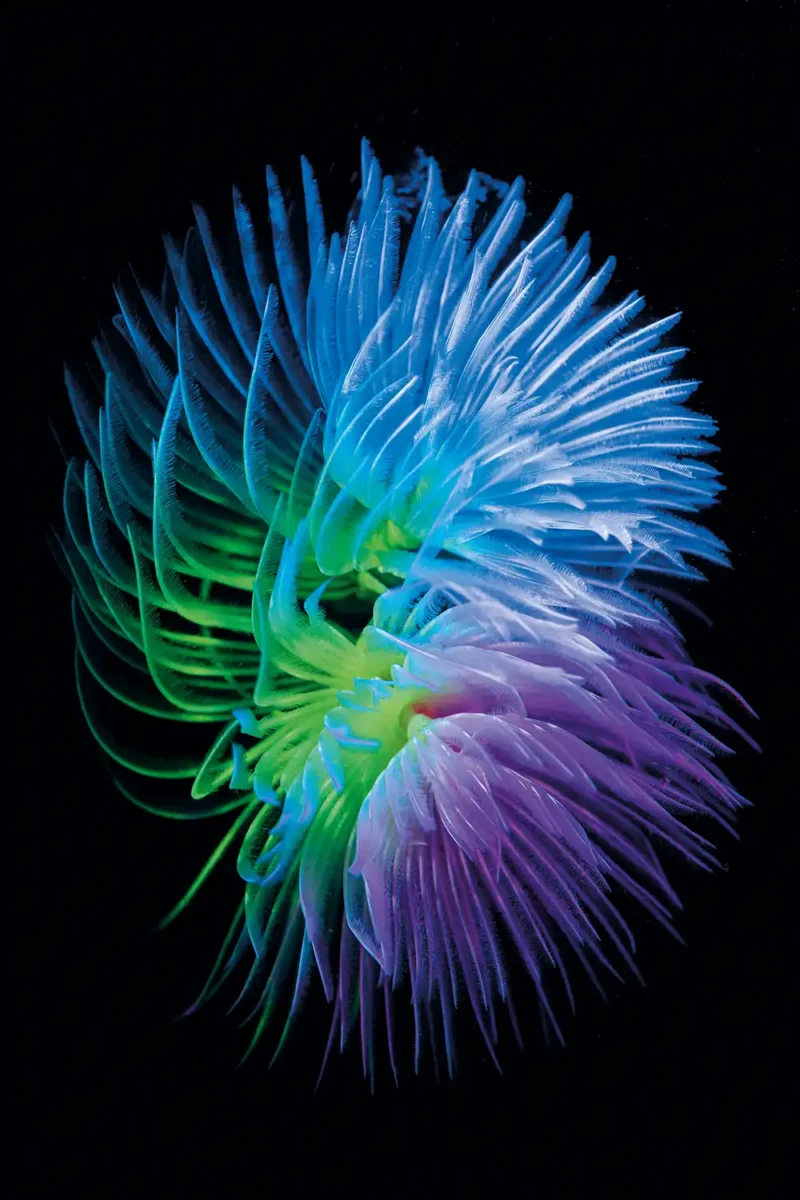
Among all the images to be judged, there were some amazing ‘WOW’ shots! Magnificent macro images were delivered to us by very accomplished photographers.
A beautifully muted shot of a frogfish in front of a graphic background produces a collective gasp from the judges when it appears on our viewing panel.
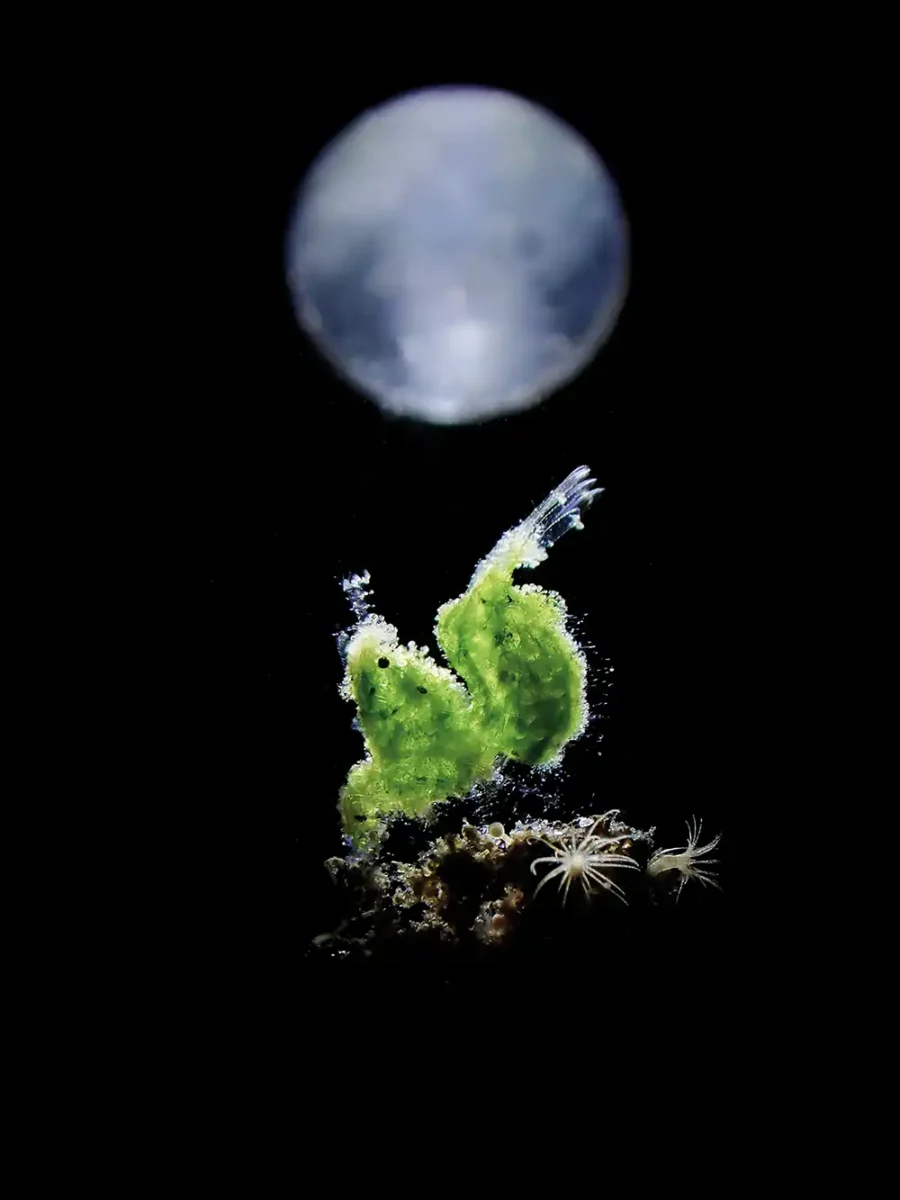
I am particularly impressed with a beautifully lit photograph of a hairy shrimp featuring a torch that mimics the moon.
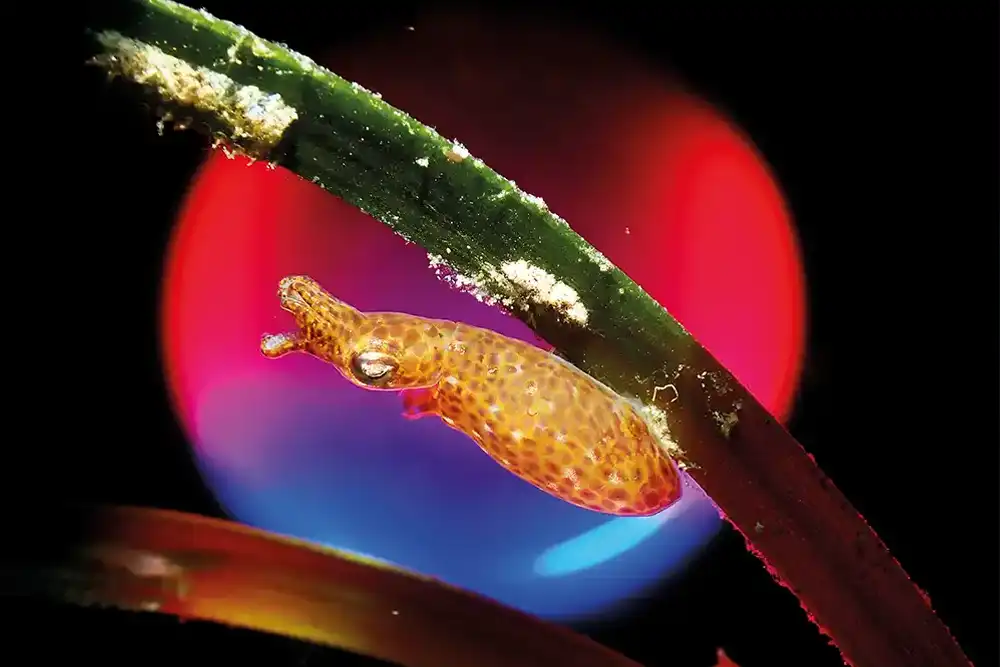
Images with colourful backgrounds stand out from the crowd, and action-packed wide-angle shots prove that, photographically speaking, the waters around Dauin have it all.
Judging from the submissions, it also appears that the participating photographers are ethically minded.
Location, location, location

The experience of judging the Dauin Splash-In was a great privilege. Not only do we get to see the incredible photographs of the contestants, but we are also blessed to be hosted by Silver Reef Dive Resort, who generously support the event.
Owner Analynne Sison is the first Filipina instructor trainer in the Philippines, and also a keen photographer herself, who supports her Silver Reef Photography Club members as a critter spotter – for which she won the ‘Best Spotter’ award in last year’s competition.
Silver Reef pitches itself as an ‘eco-minded, conservation-centric, home-from-home’ with rooms crafted out of 40-foot-high upcycled shipping containers and a staff comprising 65 locals.
Good diving practice is encouraged, and the resort’s guides are trained in ethical guiding and spotting skills – an important concern with 100 divers descending on the region.
Analynne told me that the organisers are mindful of the potential for damage, but the coastline is 25 kilometres long, and the resorts are careful to coordinate dives to prevent crowding.
It’s clear this is a professional event taken seriously by participants and organisers alike. The only tragedy of my experience there was that my luggage got lost in Doha Airport, so I couldn’t shoot with my own camera.
Fortunately, DIVEVOLK, who sponsored the event, let me borrow one of their smartphone-compatible housings to use with my iPhone. I captured some cute lemon gobies and some truly fantastic footage of a manta ray.

‘Manta ray,’ I hear you cry? There are no mantas in Dauin! Rare though they might be here, two weeks before the festival, a juvenile female manta made this stretch of coast her home.
She displayed behaviour so unique – feeding on directly from the sand rather than in the water column – that footage of her was shared hundreds of thousands of times on social media during our stay.
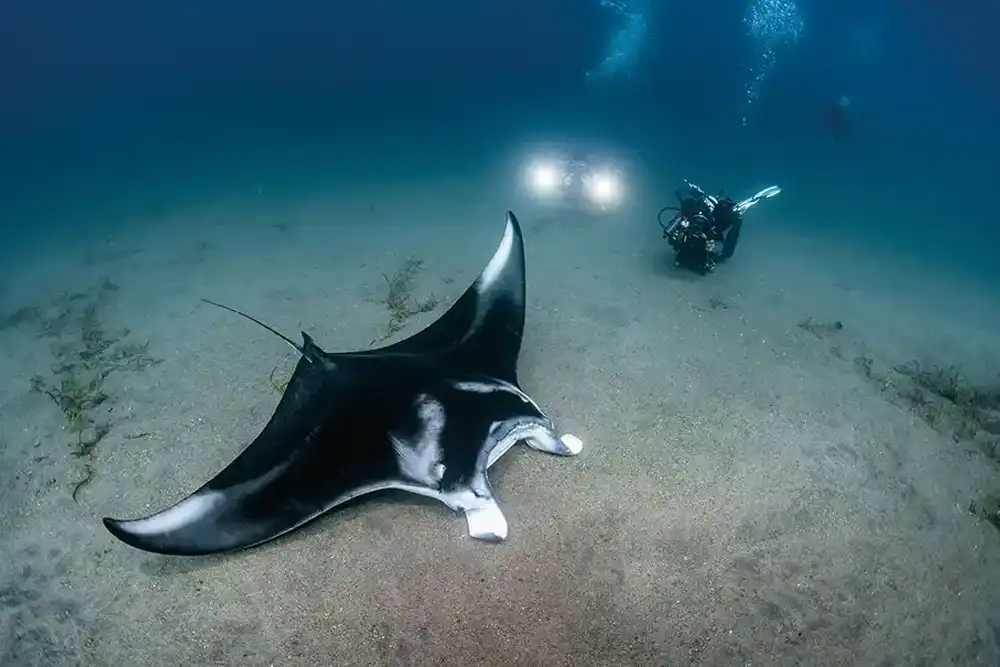
Scientists were interested – there may be a documentary. We named her Sandy.
Back in the competition arena, the last trophy is lifted and a wild evening of celebration winds down as the fatigued contestants begin to disperse.
I contemplate what a joyous occasion the whole event has been, a meeting of like-minded people honouring wildlife with the art of underwater photography.
Many of the images get my own creative juices flowing, and the next day I’m back in the water, swinging my own camera (which has finally made its way from Doha), chasing the golden dream of a competition-winning picture.
Jenny’s top tips for competition success

Okay, so here are some inside tips between just you and me as to what I’m looking for as a photo competition judge. I come from an informed position – I won my first award for wildlife photography at the age of 13, at my school, with a picture of a squirrel. There were no other entrants. I know what I’m talking about.
FRAMING usually conforms to well-known compositional guides such as the rule of thirds. These feel easy on the eye, and the seabed, top of the coral or surface of the water often hits one of these lines in wide-angle shots. Natural framing is very effective, such as coral surrounding a fish, a shell around an octopus or a bottle mouth around a goby.
ORIGINAL photos will blow clichéd images out of the water. I’ve seen so many emperor shrimp perfectly lined up (read: manipulated) on nudibranch heads that my only thought when I see this photo is ‘next’. Rare animals are wonderful, but common animals can still be a joy to behold when captured creatively or with a unique technique.

EYE-CATCHING images pack a punch. Look at the pictures you capture as a grid of large icons on a screen – Adobe Lightroom, if you have it, is useful for this. Your eye will be drawn to potential winners, often because they hit the following sweet spots:
LIGHTING should be even across the image with no glaring hotspots. Strobes should be pulled far enough back to reduce backscatter while taking the image. Consider using one strobe to emphasise textures within an image. Torches or UV could be utilised for creativity.

COLOUR attracts and holds my attention. Think about the palette you are working with. My favourite colour is purple, so I’ll often keep my eye out for something like an elephant ear sponge to find an animal on. If there’s a choice between two anemones, start with the one with the most vivid skirt.
BACKGROUNDS When I hit the reef, I often look for a background before I’ve even found my subject. Clean, colourful, patterned, textured or just plain black – and think about layers, especially in wide-angle, such as your subject in front of a colourful reef, followed by silhouetted reef then surface ripples as an example.

EYE CONTACT creates connection with the viewer and can raise a good image to an excellent one. It sounds silly, but wiggling your fingers near your lens port can make a little animal look down the barrel. Make sure the eyes are pin-sharp in the final image.
And finally…
Rules were made to be broken! Not the competition rules, of course, which you should follow to the letter, but the creative rules above, for sure. So take all these hints with a pinch of salt and add your own flavour!
Jenny was hosted by Silver Reef Dive Resort during the festival. If you too are feeling inspired by the photographs and think you would enjoy the challenge, why not enter next year’s competition? Whether you’re a beginner or a pro, shooting on a compact, mirrorless or DSLR camera, there’s a category for you. The competition runs from 24–28 June 2026; entry costs around US$20.

More great reads from our magazine
- My Octopus Mother – a life-changing encounter in the Emerald Sea
- The old man, the sea, and the son – a father and son’s diving journey to Galápagos
- Full Circle – Crowley’s return journey through 25 years of Sharm El Sheikh
- Treasure Islands – Turks & Caicos with Aggressor Adventures
- Marine Manoeuvres – Aqaba’s underwater military museum

Take out a year’s print and digital subscription from £23.99
(UK price, international postage extra)
