


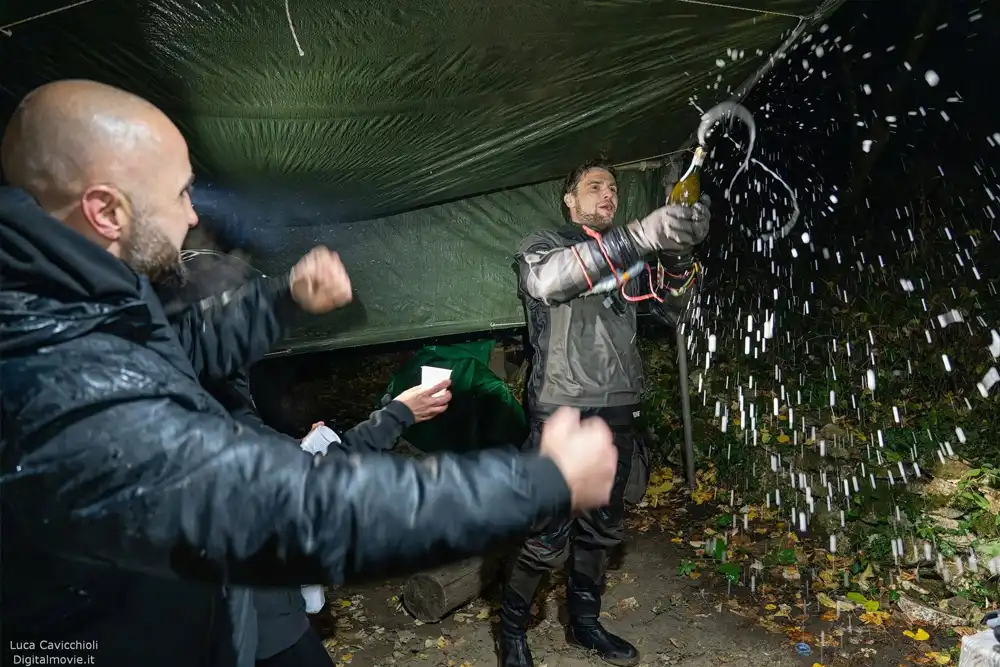
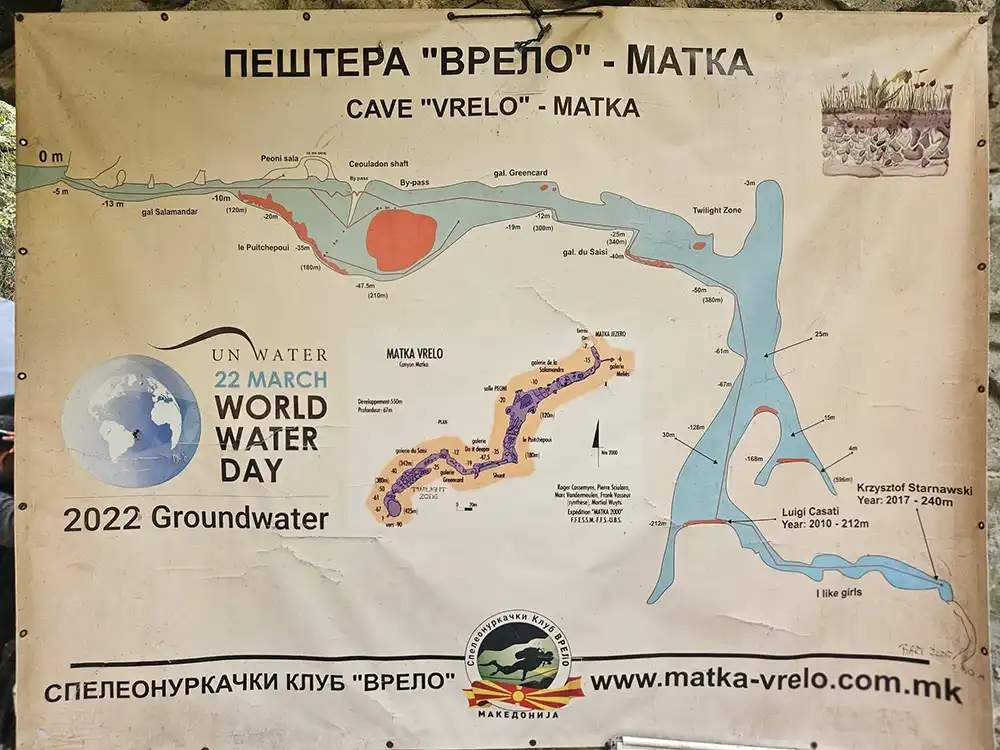
Polish cave diver Bartłomiej Pitala has broken the world record for the deepest underwater cave dive, having reached a depth of 338m (1,109ft) in North Macedonia’s Matka Vrelo cave system.
Although it has not been officially ratified as a Guinness World Record, the depth recorded on his dive computer exceeds the previous cave diving record of 312m set by French cave diver Xavier Méniscus in 2024 by 26m, and is almost 6m deeper than the official open water dive record of 332.35m set by Egyptian diver Ahmed Gabr in the Red Sea in 2014.
Pitala’s dive also exceeds his own previous depth record inside Matka Vrelo by 51m, having reached a depth of 287m during a previous expedition in 2025.
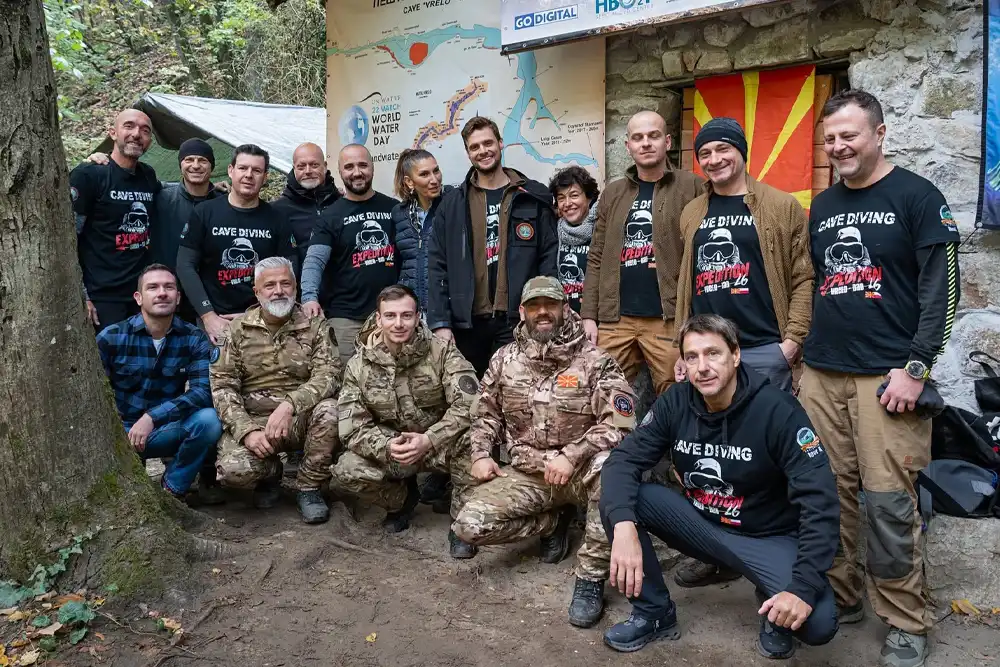
The record was set during a joint expedition between Pitala’s Polish BAD Exploration Team and local cave diving organisation Club Vrelo and followed months of preparations.
Dive planning
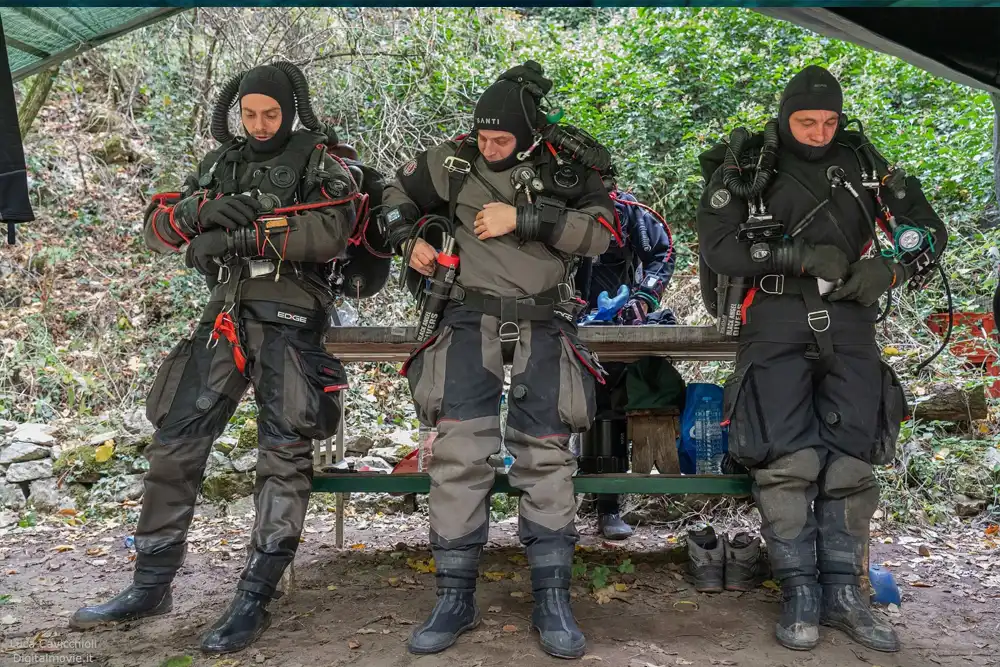
With the assistnace of his support team, fellow cave divers Michał Sojka, Bartosz Zdziebel and Tomasz Wciórka, Pitala conducted four preliminary dives to depths of 150m, 190m, 240m and 290m to refine the decompression schedule, emergency procedures and equipment distribution.
The steadily deeper dives would also test Pitala’s potential reaction to high pressure nervous syndrome (also known as high pressure neurological syndrome), or HPNS, a condition brought about by breathing gas containing helium under high pressure, and which can induce tremors, dizziness and impaired coordination.
More than 25 emergency breathing-gas cylinders were placed at various locations inside the cave down to a depth of 180 metres, and seven support divers were positioned to assist Pitala during his lengthy ascent.
The team from Dive Club Vrelo also prepared an underwater habitat at a depth of 8 metres, to enable Pitala to carry out a substantial part of his decompression obligation in a warm, air-filled environment in case his drysuit failed or he experienced problems while decompressing.
The expedition received the honorary patronage of North Macedonia’s president, Gordana Siljanovska-Davkova, whose support helped secure a helicopter on standby, medical personnel and access to a hyperbaric chamber in Skopje.
The record-breaking dive
The record-breaking dive began shortly after 10am on 16 October, with Pitala accompanied by his support divers to a point 350m inside the cave at a depth of 24m.
He wore a back-mounted Liberty closed-circuit rebreather as his primary breathing supply, with a sidemount Liberty CCR as his bailout.
An additional sidemount Liberty CCR was delivered to him by a support diver at 140m as a contingency in case of problems with his primary and backup.
Pitala used Seacraft Ghost diver propulsion vehicles (DPVs) to carry him alone throuth the cave’s main shaft. He reached a depth of 212m in under five minutes, then travelled another 100m horizontally to reach the almost vertical passage where he would set his record.
Twenty seconds later, he passed the end of a guideline and reel that he had left in the shaft during the 2025 expedition, as the cave continued steeply downwards.
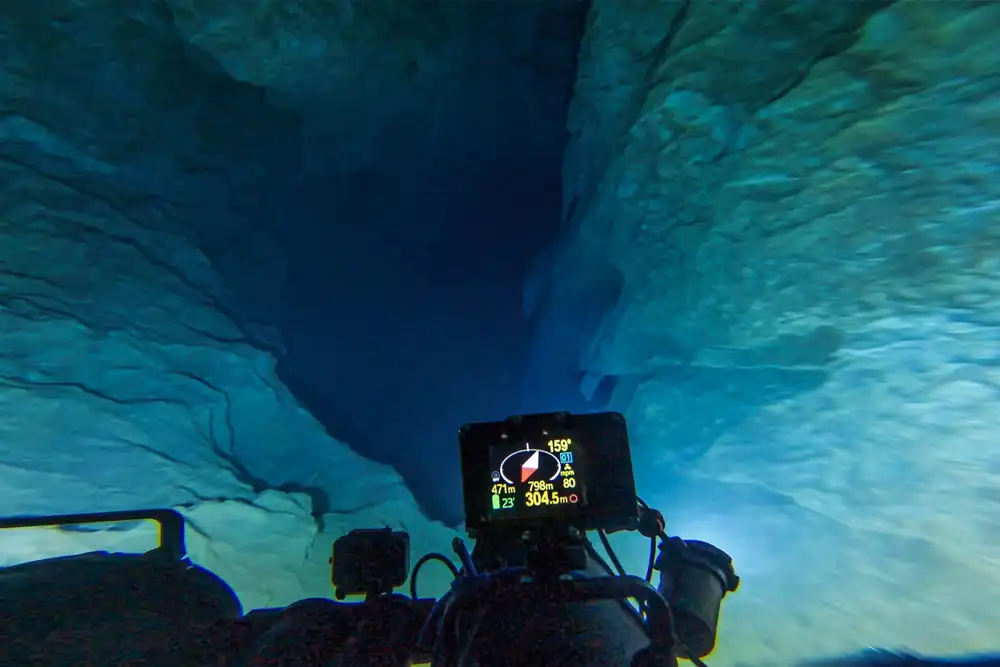
‘Moments later, I found myself at the edge of a vertical drop into a large chamber,’ Pitala wrote in a detailed account of the expedition posted on Facebook.
‘As I descended, I had to judge within a few seconds which of the dark openings in the chamber walls offered a way forward. The most promising one was to my left, directly below me.’
‘A few seconds later, I passed the 300-metre mark. Matka Vrelo had now become only the second underwater cave in the world to be explored beyond 300 metres by a human diver! I felt very good.
‘I experienced no visual or other impairment from HPNS, and gas density was not causing me any problems either. But the drop was still descending. Below me, I could already see the pitch-black mouth of another passage.
‘I had been in this newly discovered section for only about 15 seconds, and I felt fully in control. I decided to follow it, making full use of the speed of my two Seacraft Ghost DPVs.
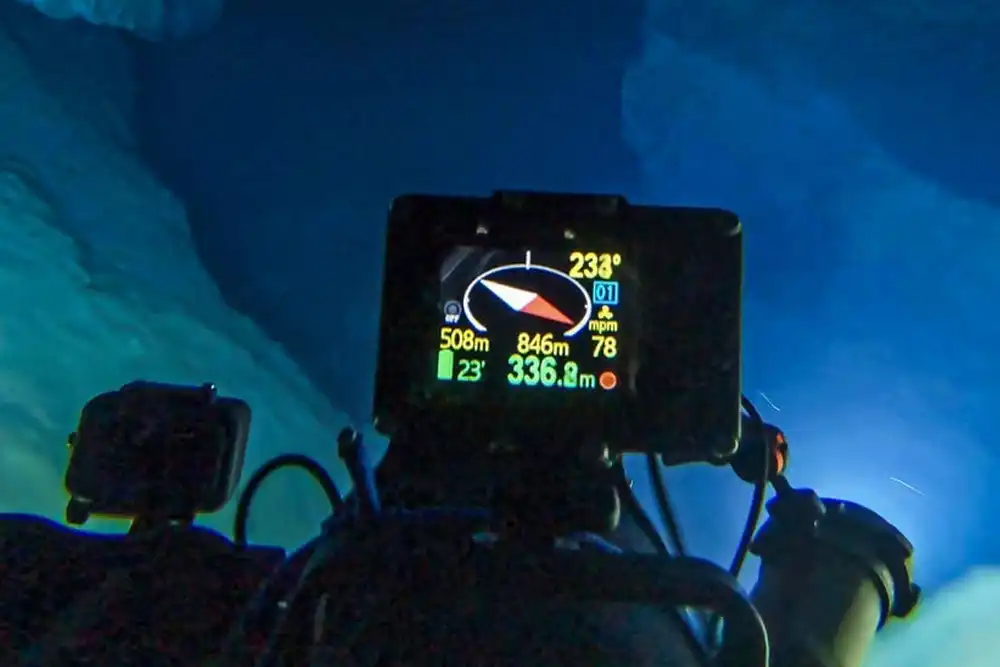
‘A few seconds later, I was at 315 metres. Matka Vrelo was now the deepest underwater cave explored by a human diver — and the passage was still dropping steeply.
‘Before the dive, our calculations had indicated that I could spend up to 45 seconds exploring the new section before starting my return, keeping the total dive time within what we considered a reasonable limit of around eight hours.
‘At that moment, I still had roughly 20 seconds available to go further. I remember thinking: “The cave always dictates the path. Now it is offering you a maybe once-in-a-lifetime opportunity. You will never feel more ready.”’
‘At 338 metres, I decided not to push the limits of the equipment any further. The passage was still going down steeply. The way forward was unmistakable. I was the deepest man on Earth.’
The lengthy decompression
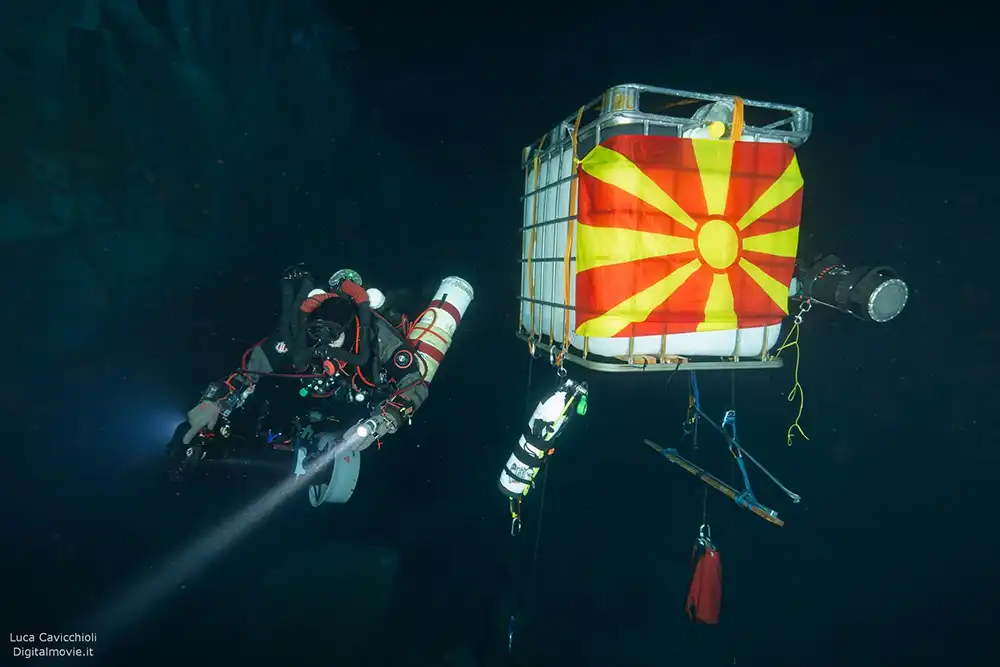
Having reached a depth beyond that of any previously recorded scuba dive, Pitala now faced the considerably longer task of returning safely to the surface.
‘The “easy” part of the dive was over,’ he wrote. ‘Now came the real challenge: more than eight hours of decompression after a dive unlike any that had been performed before.’
Rather than ascending directly to his first planned decompression stop at 150m, Pitala took what he describes as an ‘individual’ approach based on studying the experiences of other deep cave explorers such as Gigi Casati and the previous record holder, Xavier Méniscus, and slowed his ascent considerably from 210m.
‘This strategy added approximately an hour and a half to my decompression obligation,’ he said. ‘In return, I can say that I experienced no decompression problems, either in the water or after surfacing.’
Support divers accompanied him throughout the lengthy decompression, which lasted more than eight hours. In the end, he did not need the underwater habitat, and was able to walk out of the water without assistance.

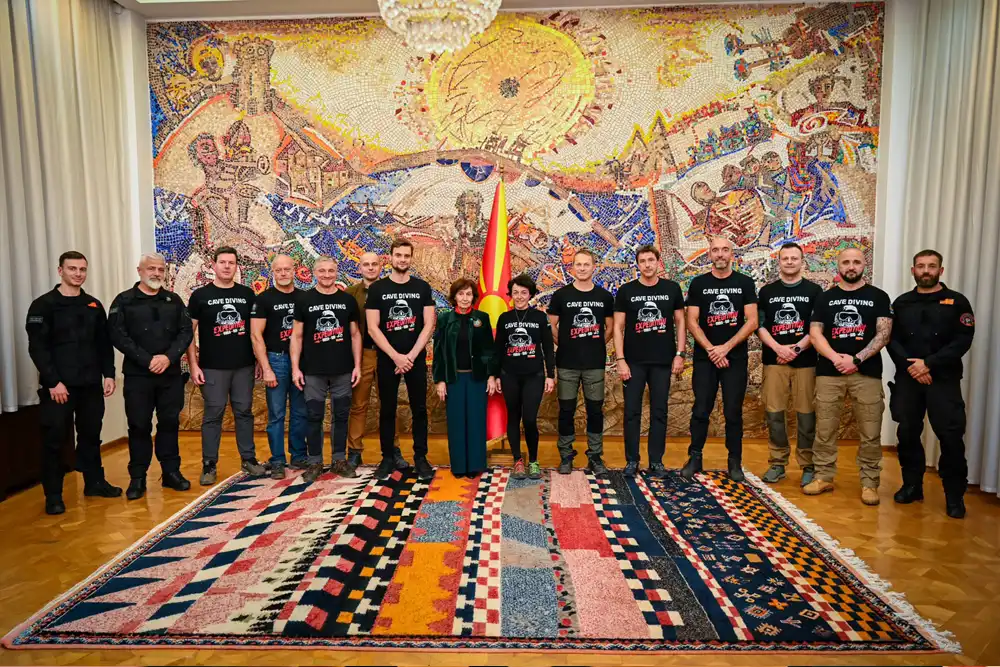
President Siljanovska-Davkova met members of the expedition team on 17 October following their return to congratulate them on their achievement, stating in a press release that the world record was ‘not only a testament to the knowledge, courage and perseverance of the cave divers, but also a genuine opportunity to promote Macedonian cultural heritage internationally as something truly exceptional.’
Pitala, however, writes in his post that he was never expecting the outcome to be so significant.
‘When I set out on the final push dive, none of us expected the outcome to be this significant,’ he wrote. ‘Our objective for the expedition was to take Matka Vrelo beyond 300 metres. That alone would have been a major achievement.
‘In my scenarios, I imagined the cave bottoming out somewhere around 305 to 315 metres, or ending at a massive rockslide that would block any further progress.
‘Instead, we did not just pass a significant depth milestone. We pushed the boundaries of what had been considered achievable in both human and equipment capabilities.
‘And the cave is still going down.’
The expedition team is preparing to release footage and photographs of the record-breaking dive, together with survey maps and a 3D visualisation of the newly explored cave passages.
Pitala also says there are many other stories to be told, but he will be saving them for his presentations at the Baltictech Conference 2026 and Dive-Expo Antwerp, among others.
Follow the BAD Exploration team on Facebook @badexplorationteam for future updates
Related stories

- SS United States becomes world’s largest artificial reef - 12 November 2026
- Red Sea liveaboard Unity seriously damaged by fire in Hurghada - 9 November 2026
- Investigation sought after underwater confrontation in the Maldives - 4 November 2026
