


Jordan’s dive offering may be small compared to that of neighbouring Egypt, but judicious scuttling – including the surreal Underwater Military Museum – has created a playground for wreck enthusiasts
Words and photographs by Anthony Leydet
As I take my eyes off the ochre landscapes surrounding the Gulf of Aqaba and let the surface slowly recede above me, I have a pretty good idea of what I’m going to find at this unique dive site. Even so, the view is breathtaking as soon as I catch sight of the fuselage of the first helicopter, resting on the sand just a few metres from its neighbour.
They are facing the same direction, as are the two cannons a few fin strokes away in front of them. Looking further ahead, I can make out armoured vehicles and tanks. Laid out before me is a battlefield, set for a combat scene like no other.
Less well known as a dive destination than neighbouring Egypt, Jordan has no more than 30 km of Red Sea coastline, with Aqaba its only coastal city.
Wedged between Saudi Arabia to the south and Israel to the west, Aqaba sits at the northernmost end of the 160 km-long Gulf of Aqaba, separating the Sinai from the Arabian Peninsula.
This peaceful seaside resort is geared towards water sports, in particular scuba diving. Facing stiff competition from Egypt, which attracts most of the region’s divers, the Jordanian government has invested heavily in boosting the sector. King Abdullah II, a keen diver, regularly organises and participates in coastal clean-up operations.
A good portion of Aqaba’s seabed has been designated a marine reserve. The Aqaba Marine Reserve stretches about 7 km along the southern coast of Jordan’s Red Sea territory.
Its goal is to preserve the marine environment while supporting sustainable use. To avoid conflict between activities and to protect ecosystems, the reserve is divided into five zones: a protected area (no access), swimming and recreational area, boating zone, diving and snorkelling area, and beach use zone.
The battlefield beneath
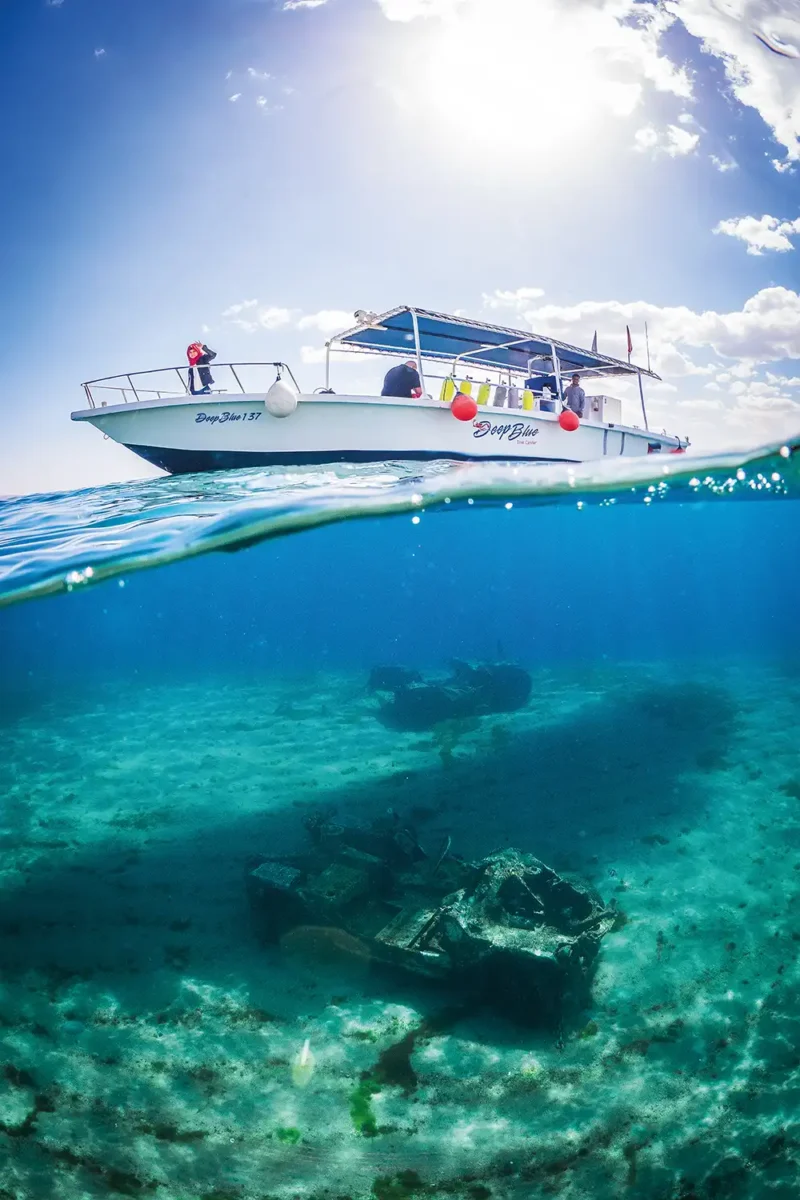
For decades, Aqaba has built a reputation as a wreck diving destination. In 1999, the Royal Marine Conservation Society of Jordan (JREDS) created the first artificial reef here by sinking an M42 Duster tank that had served in the Jordanian army.
Perched on a sandbank near the shore, just 6 m down, it draws both snorkellers and divers doing safety stops, along with an ever-growing range of marine life.
In 2019, the Aqaba Special Economic Zone Authority (ASEZA) installed 19 military aircraft and two Jeeps in tactical formation on the seabed, only a few dozen metres from the shore.
The site lies at a maximum depth of 28 m, meaning that even snorkellers can glimpse parts of it.
There are those who love wreck diving, and those who don’t. While wreck enthusiasts, and especially technical divers, are prepared to dive under any conditions to explore a wreck, others pay very little attention.
Aqaba’s Underwater Military Museum might change their minds. A parade of 21 decommissioned military machines coherently arranged in battle formation and stretching 140 m across the seabed makes for an extraordinary experience.
Let me take you on the tour…
Wrecks for all levels

Accessible to divers of all experience levels (at least in part; Open Water divers need to watch their depth), the museum opens with two Cobra helicopters standing upright on the sand between 25 m and 28 m. First deployed in 1967 during the Vietnam War, these American aircraft were among the world’s first combat helicopters.
The two 155 mm Canon M1 guns a few metres along were manufactured by the Americans too and used during the Second World War. They were later used by the Jordanian army, serving in various conflicts.
Imagine yourself in the middle of a battlefield: Cobras, armoured personnel carriers, anti-aircraft units, tanks and ambulances all poised in formation. Some are open, allowing you to peek inside without having to enter. Manufactured in the US, UK and South Africa, each is worth a closer look.
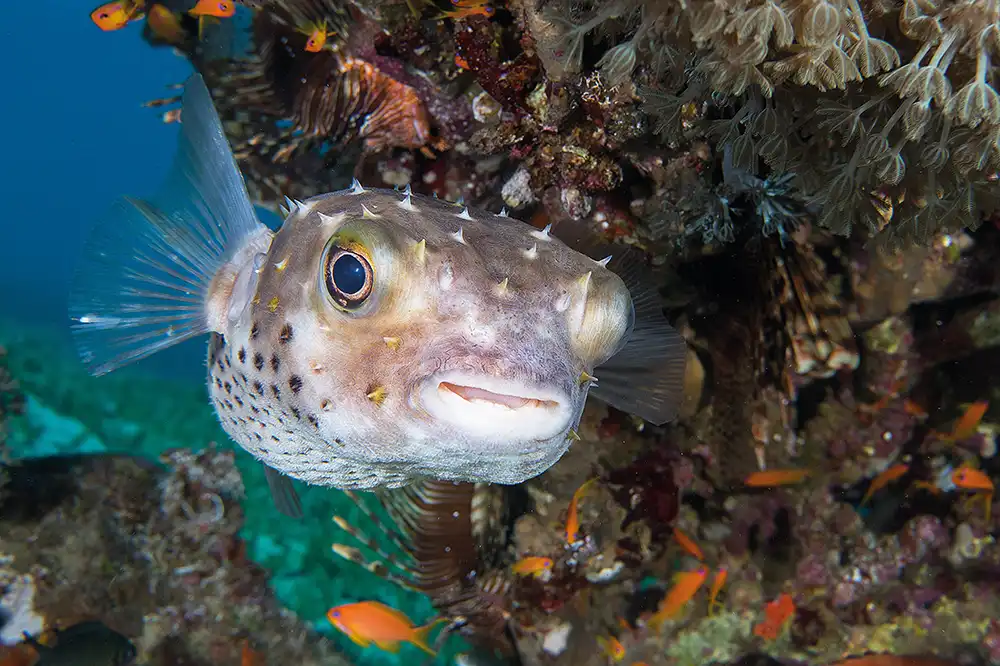
The site is vast – worth exploring over at least two dives. Myriad species find refuge in the midst of the machines: a magnificent porcupinefish hangs within a metal hatch on one of the five Ferret armoured vehicles, while another shelters on its side on the sand.
A school of small black and white fish dart about, forming a ball that shifts back and forth. Lionfish hide here and there and those with good eyesight might spot the occasional pipefish.
The two Jeeps on the sandbar at the end of the site make for a diverting safety stop. They’re also ideal for snorkelling, as they sit at just 5 m down and are close to the beach. This iconic American military vehicle was mass-produced for Allied forces during the Second World War, and Jordan began using them in the 1960s.
More world-class wrecks
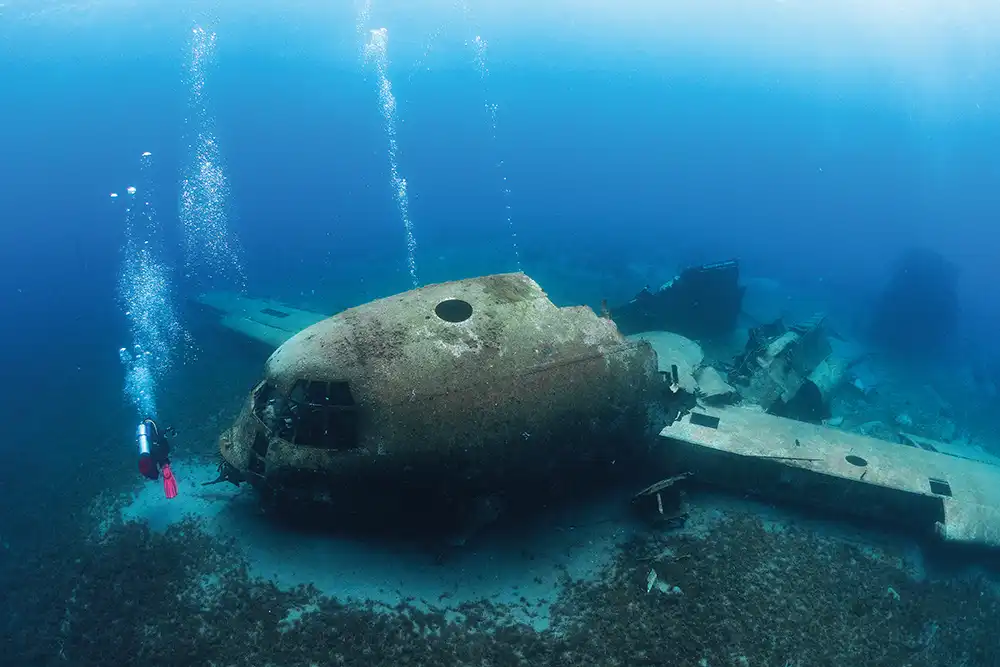
Beyond the Underwater Military Museum, other spectacular wrecks have been created in the waters of Aqaba. A Royal Jordanian Air Force transport aircraft, the Lockheed C-130 Hercules, was sunk in 2017 at a depth of 17 m. Originally undamaged, a heavy storm later broke the plane up, giving it a more dramatic look, as if it had crashed into the sea.
Then, in 2019, it was an imposing airliner’s turn to be sunk. The 54 m-long Lockheed TriStar rests on a sandy bottom between 15 m and 28 m of depth and has been adapted for easy penetration by divers.
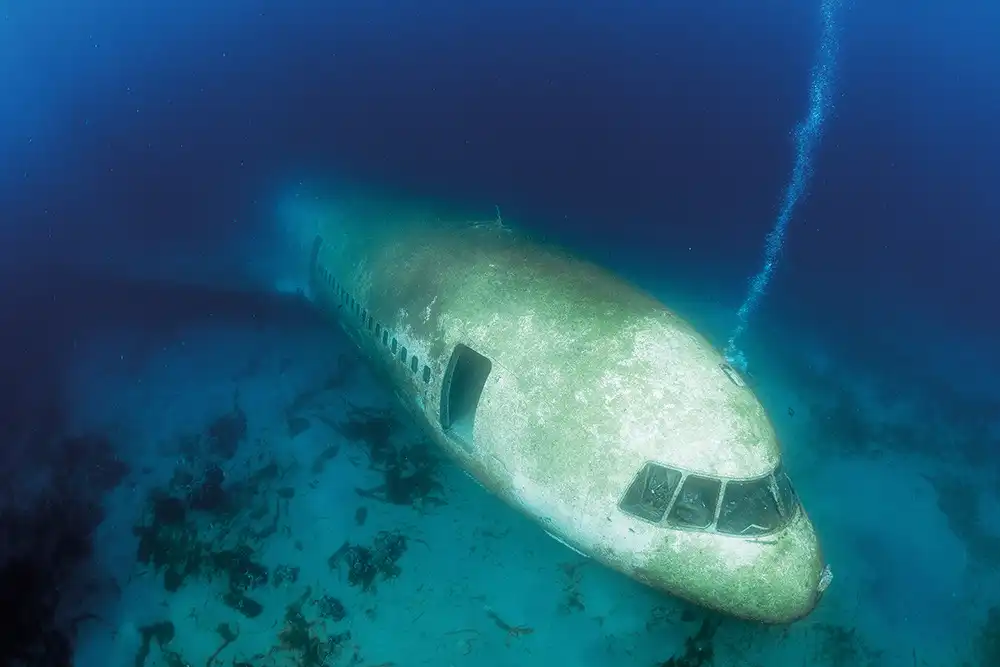
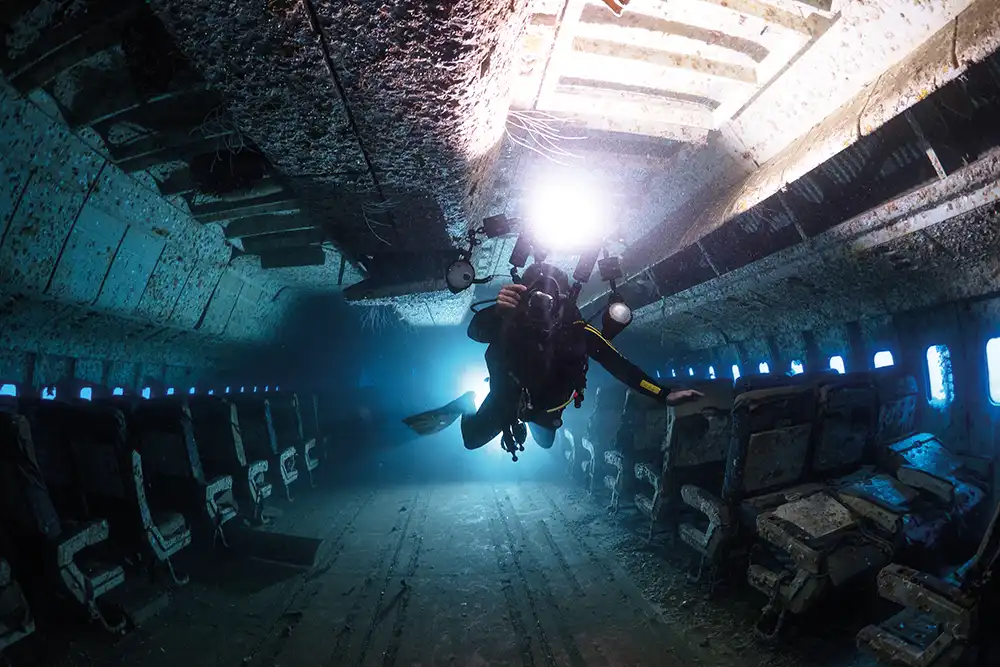
The doors have been removed, as has the middle row of seats. From the surface, and as you begin your descent, excellent visibility means you can see this imposing aircraft in its entirety – it’s quite a surreal experience.
Once inside, you’ll find it’s easy to move around the cabin, though you’ll want a torch to help you find your way. Don’t miss the cockpit – whose windows offer a unique aquarium-like view of the surrounding waters – then exit through the air intake at the rear of the aircraft.
Returning to something more classic, one of the most famous wrecks in Aqaba is a Lebanese cargo ship named Cedar Pride. After being partially destroyed by a fire in 1982, the 74 m-long vessel was left abandoned in Aqaba’s port until 1985, when it was scuttled at the request of King Abdullah II.
Lying on its port side at a maximum depth of 27 m, the wreck – including its interior – is accessible to divers of all levels. Now very well colonised, it’s home to colourful hard and soft corals and a huge variety of other marine life.
Beyond the wrecks

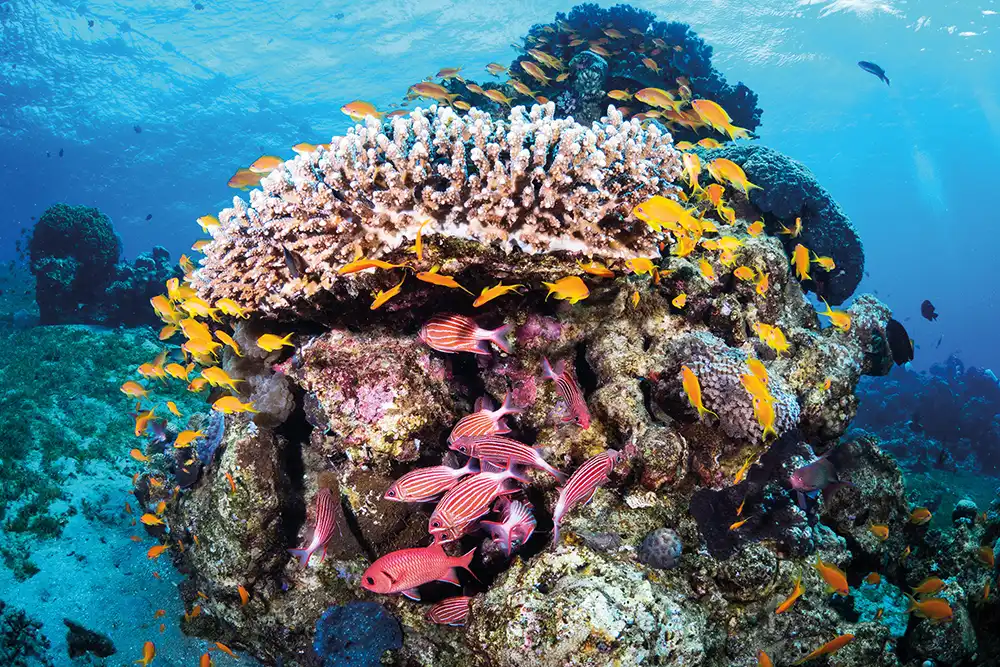
While Aqaba is undoubtedly a terrific destination for wreck diving, let’s not forget that we are in the Red Sea, with its incredible biodiversity and its sumptuous coral reefs.
These seascapes may not be quite on the same scale as those in neighbouring Egypt but there are plenty of beautiful coral garden dive sites to explore, many of them at shallow depths and easily accessed from the shore.
It’s glorious, stress-free diving, particularly for underwater photographers hoping to get their next great shot. The house reef at Deep Blue Dive Centre, located at Tala Bay Beach Resort, south of Aqaba, is on a par with some of the house reefs in countries such as Indonesia and the Philippines, with an incredible array of creatures.

Frogfish, moray eels, nudibranchs, shrimps, clownfish and boxfish are just a small sample of what can be found below the surface, with pontoons providing photographers the chance to play with light and shade. Then, as the only true drop-off in the area, the Power Station site is a must.
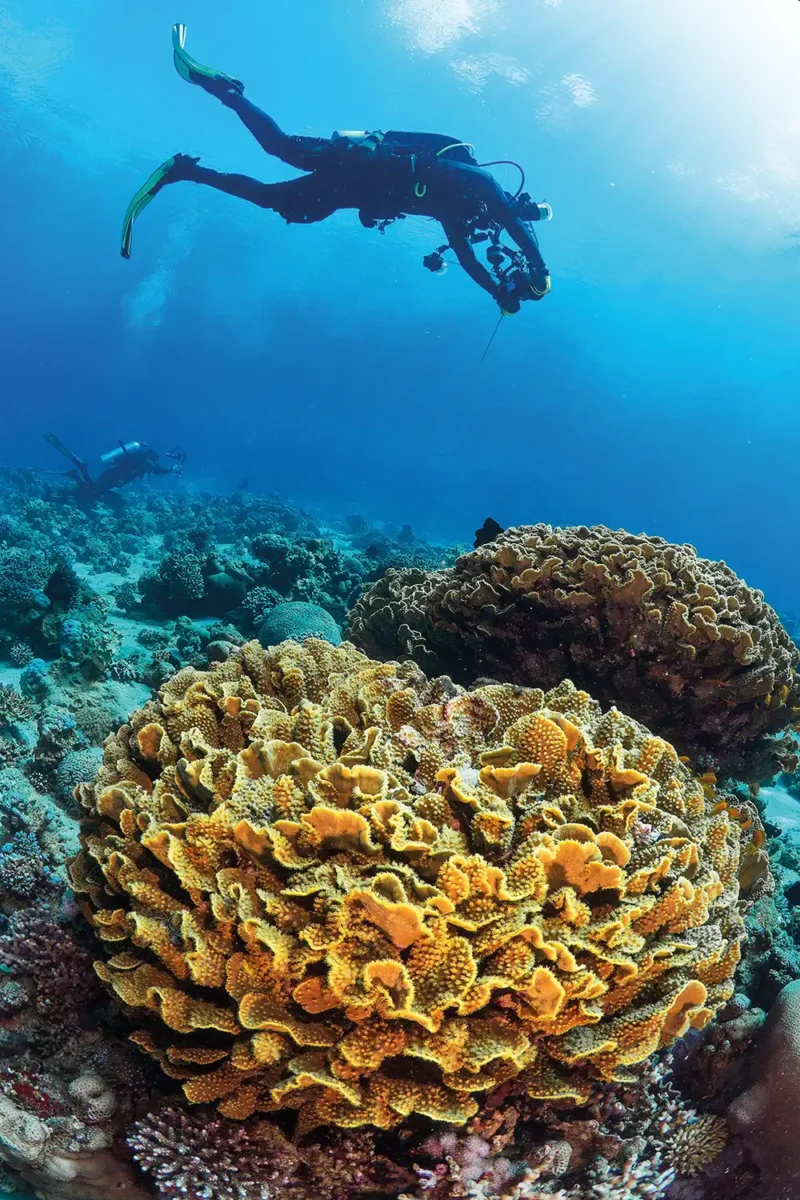
The wall starts at about 15 m and plunges into the abyss, colonised by gorgonians and black coral, and attracting plenty of fish. A little shallower, almost overlooking the top of the wall, you’ll find a garden full of lettuce leaf coral.
Aqaba is often seen as a place where tourists come to try a day’s diving as part of a longer trip. Restricting yourself to such a quick stop would be a shame, however, because this is a dive destination in its own right. Plan to spend four days here and you’ll be able to experience the best it has to offer.
Topside
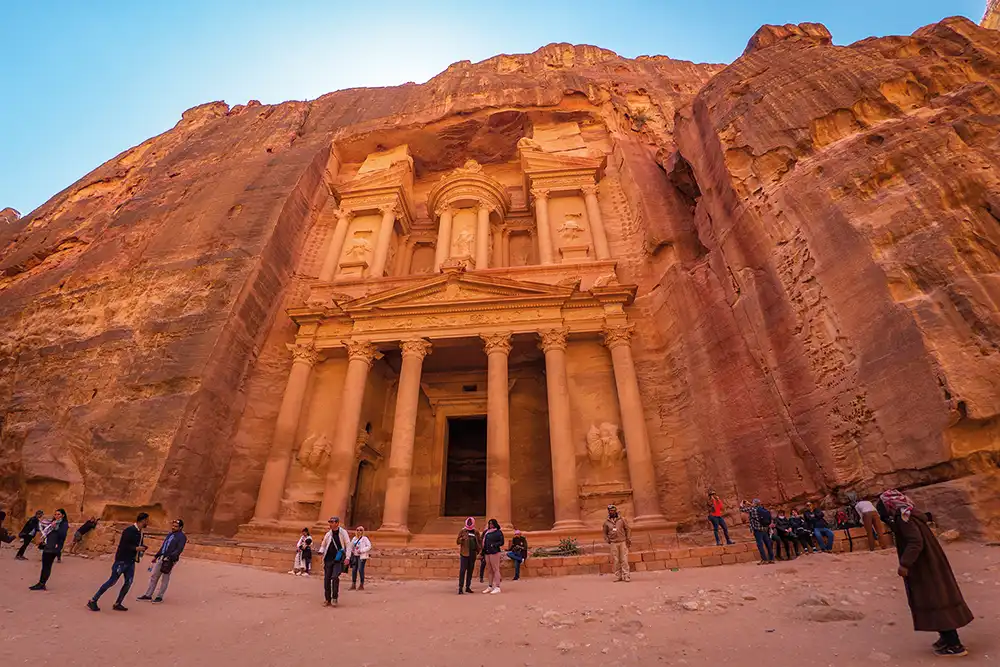
It would take several weeks to visit everything Jordan has to offer. There’s the capital, Amman, a trip to the Dead Sea, the countless archaeological sites and museums. But two places stand out: Petra and Wadi Rum, both UNESCO World Heritage Sites.
The Nabataean city of Petra, founded nearly three millennia ago, is most famous today for the Al Khazneh (“Treasury”) monument – the walk through the narrow Siq to reach it is unforgettable – but there’s much more than that to explore. The site deserves at least a day.
Further south lies the desert of Wadi Rum. Even if the name doesn’t ring a bell, you’ll have seen it in films like Lawrence of Arabia, Star Wars and Dune. There are canyons, arches, cliffs and vast stretches of sand as far as the eye can see. The sunsets are breathtaking and it’s a wonderful place to watch the sky at night without any light pollution.
More great reads from our magazine
- ‘Rays of Hope’ – an Interview with Karen Fuentes, founder of the Manta Caribbean Project
- ‘Taking Stock’ – expert tips on becoming a stock photographer
- ‘Voyage of Discovery’ – finding new dive sites in Raja Ampat
- ‘Machine learning’ – an interview with Blue Machine author Helen Czerski
- ‘Pierless’ – the myriad photographic opportunities of Barbados’ Cement Pier

Click here to take out a regular yearly subscription
