


Ocean engineering company DEEP has completed a two-week manned trial of its new saturation diving training system ahead of its first closed bell diver course in January 2027.
The trial was conducted at the DEEP Campus in Gloucestershire by Boskalis Subsea Services, a subsidiary of Dutch marine contractor Royal Boskalis, which specialises in commercial diving and subsea engineering work.
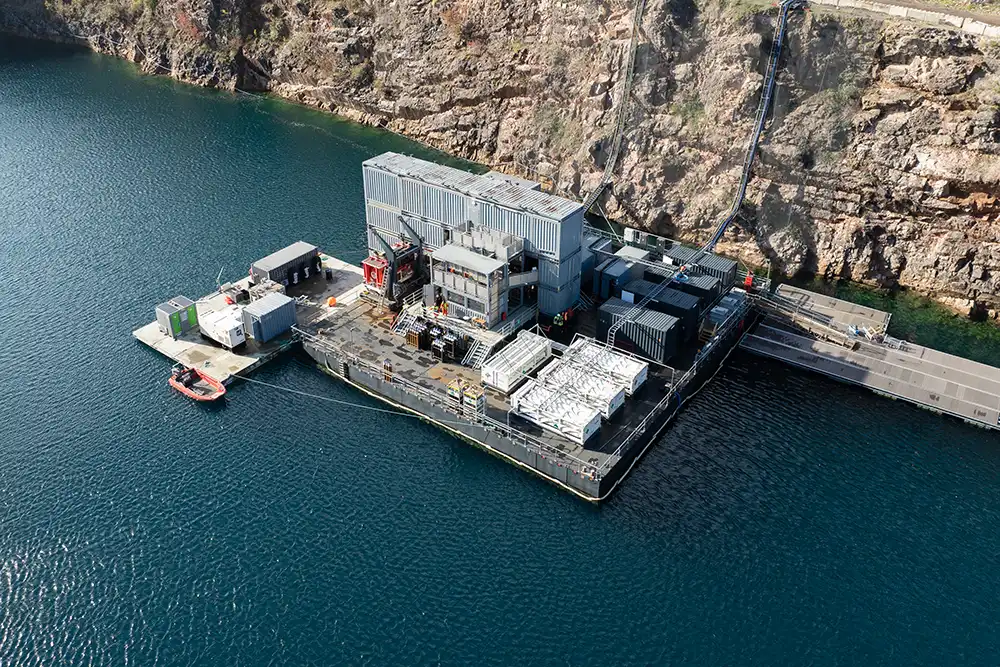
The saturation system, which includes a nine-person portable saturation system and a three-person diving bell, is installed on a purpose-built pontoon in the campus’s 80m-deep freshwater quarry, formerly home to the National Diving and Activity Centre.
Six divers were placed into the living chamber and pressurised to a ‘storage depth’ equivalent to 50m underwater until their body tissues had reached saturation, before being transferred in groups to a separate pressurised unit, the closed bell, and lowered to a depth of 60m underwater.
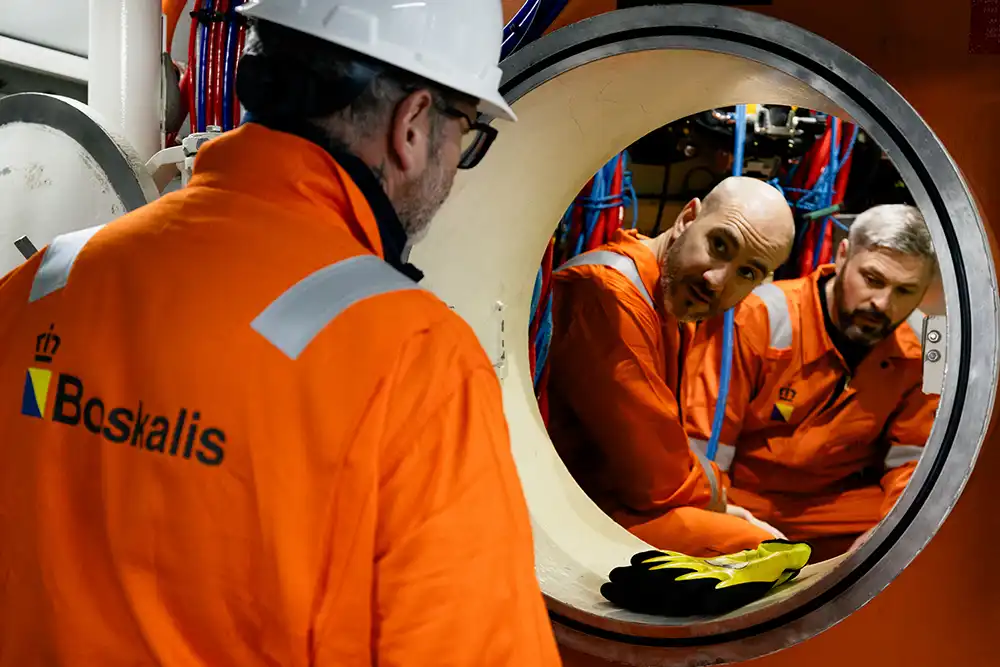
Following their dives, the team spent 53 hours back in the chamber decompressing. DEEP will now make minor changes to the system and its operating procedures based on recommendations from the Boskalis team.
‘We’re delighted to have played a critical role in bringing this new training system online,’ said Andy Butler, diving manager at Boskalis Subsea Services.
‘There’s a shortage of saturation training facilities globally and the offshore industry needs high-quality training programmes to safeguard the future success and safety of subsea operations.’
‘Boskalis have put the system through its paces, and the rigour and expertise they brought to this trial gives us total confidence in its readiness,’ said Mark Hamilton, dive manager at DEEP.
‘We can now start delivering training that the industry desperately needs to bring through the next generation of saturation divers.’
The three-week course has been designed for commercial divers who are progressing into closed bell diving.
It combines classroom teaching with practical training in closed bell operations, life-support systems, transfer under pressure and emergency response training.
Successful candidates will receive the UK Health and Safety Executive’s Closed Bell Diver certification for commercial saturation and mixed-gas bell diving.
The training programme is already fully booked until March 2027, with the first places on the course having been allocated to divers on an existing waiting list. Applications are now open for courses beginning in April.
The Gloucestershire facility will also support DEEP’s wider underwater habitat programme, after the company first unveiled its Sentinel habitat project in 2023. DEEP has since deployed Vanguard, a pilot habitat for the larger Sentinel system, in the Florida Keys.
For more information or to apply for a course, visit www.deep.com.
Related articles
