


Hands-on reef restoration has captured the world’s attention, but Wakatobi makes the case for a simpler idea – protecting marine ecosystems before they need rebuilding can achieve results on a far greater scale
By Bailey Anderson
I took my first breath underwater at twelve. Since then, much of my life, personally and professionally, has revolved around the ocean. Like many divers, I’ve absorbed years of imagery showing what its destruction looks like, but also what saving it looks like, too.
Thankfully, hopeful images appear, too – a diver planting a tiny coral fragment, Jason Momoa with Coral Gardeners in French Polynesia, or its founder, Titouan Bernicot, in a Rolex campaign alongside environmental advocates.
They offer something the ocean and its advocates desperately need – hope. Coral Gardeners has more than one million Instagram followers. In 2019, a single campaign reportedly reached more than 100 million people, helping its following grow to half a million almost overnight. Bernicot later became a Rolex Testimonee, reaching an even larger audience.
Coral gardening is tangible, optimistic and easy to understand. A fragment is planted and grows; a diver can return and see the difference. In an industry so often dominated by images of loss, there is something inspiring about being able to watch something vulnerable regain its strength.
Nuanced conversations about conservation
Working at a resort with a long conservation record has exposed me to more nuanced conversations about saving the ocean. Shortly after I joined Wakatobi’s marketing team, a renowned underwater photojournalist offered an opinion that stuck with me.
Coral restoration was worthwhile, he said, but operated at a different scale. Next to Wakatobi’s Collaborative Reef Conservation Program, he argued, the difference in conservation impact wasn’t even close.
I didn’t dismiss his opinion. Quite the opposite. He had been diving longer than I had been alive, documenting reefs around the world and watching many change first-hand. I respected that experience; I just didn’t yet understand the full context.
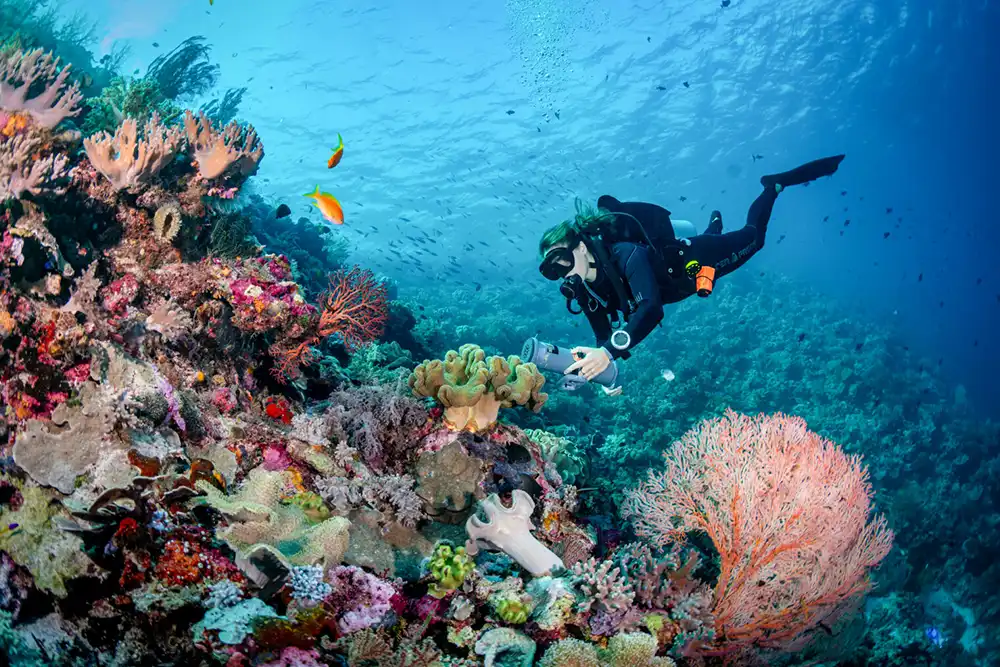
For first-time guests, Wakatobi’s conservation can appear effortless. For someone whose first underwater experience is here, it may be difficult to appreciate how unusual the reef is.
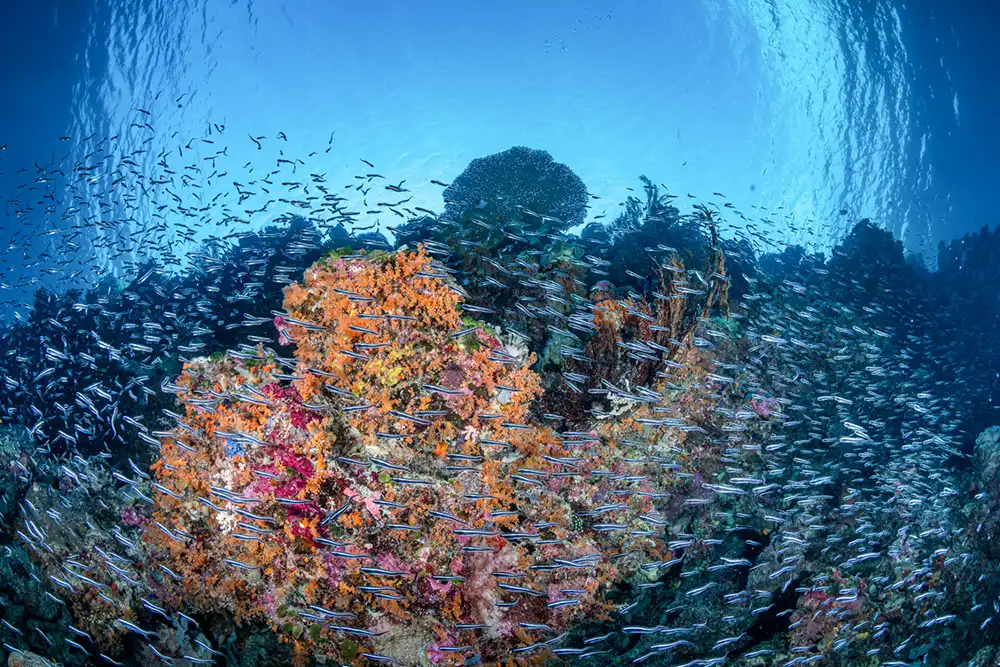
Some of my favourite moments have been early-morning House Reef swims with resident marine biologist Julia Mellers, surrounded by thousands of tiny fish schooling in the rising sun, bumphead parrotfish drifting beneath us and green sea turtles stirring as the reef greets the dawn.
A resident giant trevally might cruise past, juvenile needlefish hover in the shallows, and clouds of redtooth triggerfish surround us. Even before daylight, the reef is visibly, and noisily, alive.
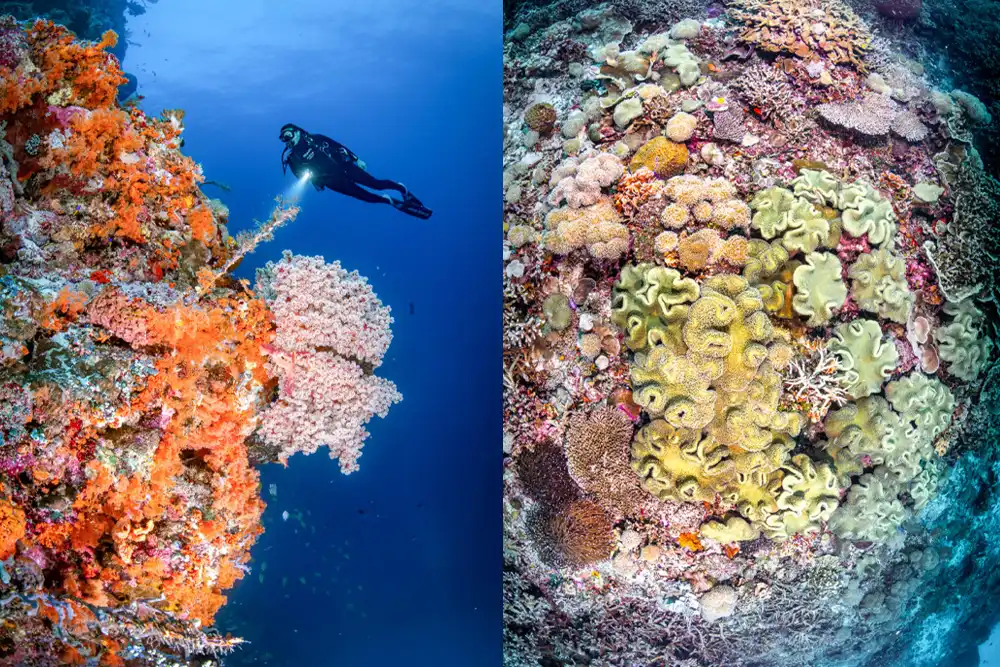
Yet there are no coral nurseries to tour, no coral fragments waiting to be planted. Little suggests that what you are witnessing is the result of an active conservation programme – and that is precisely the point.
At Wakatobi, leaving the reef alone is the conservation project. Its founding philosophy is simple – protect what is functioning, reduce pressures, and give the reef room to sustain and regenerate itself.
After 30 years, its Collaborative Reef Conservation Program has helped protect more than 70km of coral reef. Agreements provide local communities with economic benefits in exchange for protecting reefs rather than fishing them. Tourism generates livelihoods tied to keeping the ecosystem healthy.
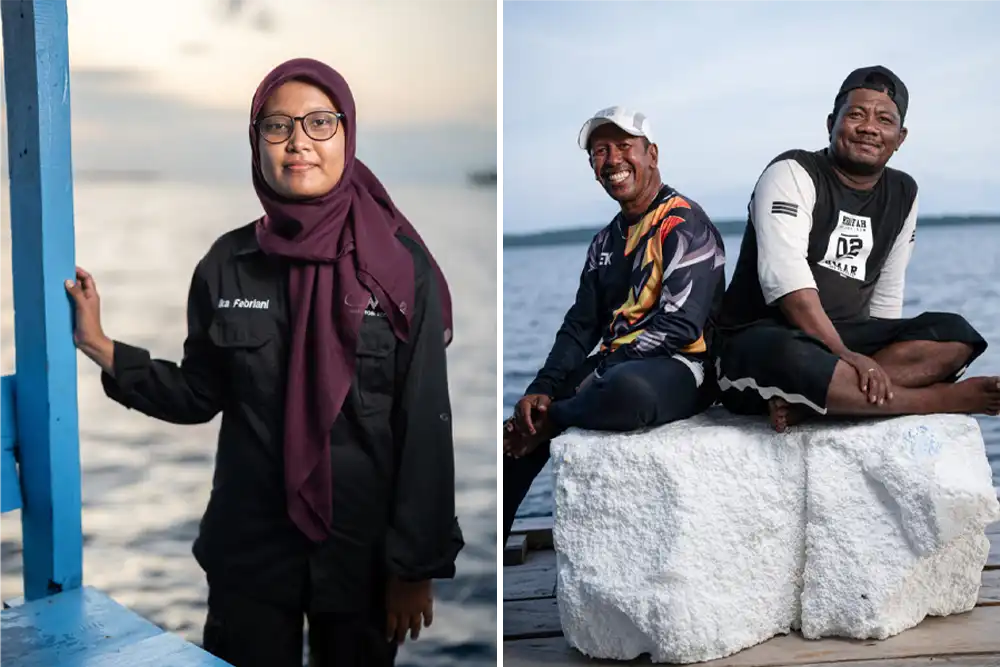
Wakatobi employs more than 450 people, including former fishermen who now help protect the reefs. As the protected area has expanded, so has the economy built around it.
Maintaining this is anything but passive. By reducing pressures such as destructive fishing and giving communities an economic stake in protection, the reef is given something rewarding – the opportunity to heal and function on its own.
Insights from Wakatobi’s resident marine biologist
When I told Julia about this article, she had plenty to say. ‘The idea of inaction is intrinsically less appealing than action,’ she wrote, reflecting on why coral gardening can be easier to see, understand and celebrate.
‘A guest at Wakatobi might only notice the benefits of conservation after five or ten years, when they return and see the same incredible biodiversity they had witnessed before,’ she added.
‘But a diver who plants a fragment of coral might return the next year, to the same destination, and see that the same fragment has doubled in size.’
One approach offers visible growth. The other asks you to appreciate what has remained. But Julia doesn’t dismiss restoration.
‘It is important that we don’t think of coral gardening itself as a substitute for protection. The two approaches serve different, but important functions,’ she explains.
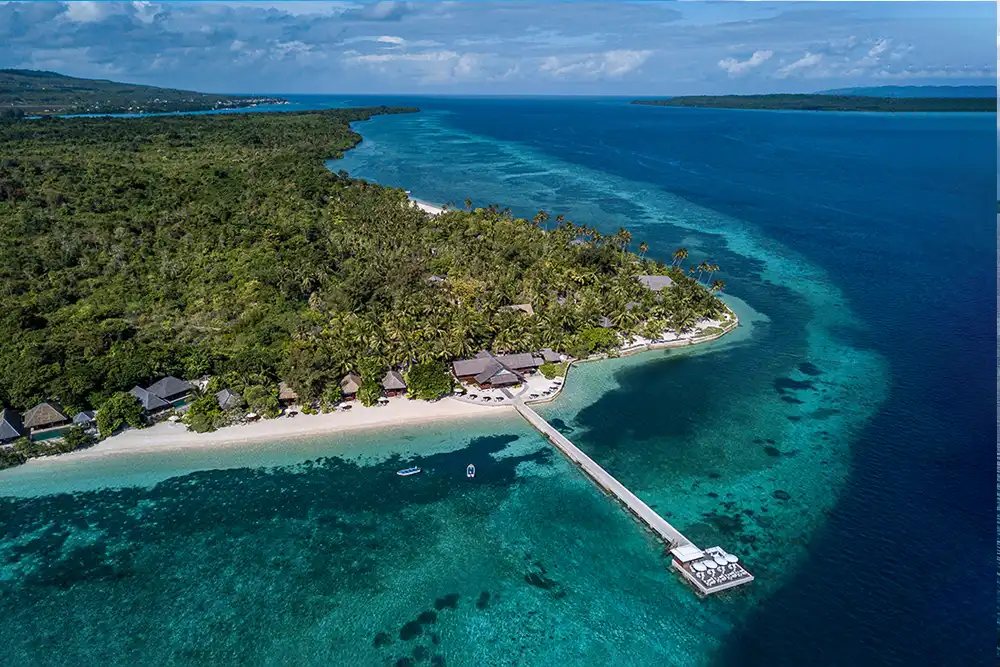
A 2020 systematic review of more than 350 coral restoration case studies found a median restored area of 100sq m. Nearly 60 per cent focused primarily on fast-growing branching corals, while 60 per cent reported less than 18 months of monitoring.
These figures do not mean restoration is ineffective – where reefs are severely damaged and natural recovery is unlikely, intervention can be valuable, but rebuilding coral patches and protecting an entire reef’s ecological processes are different challenges.
For Julia, biodiversity is crucial. ‘If you have a reef with high species diversity and richness, it is unlikely that any single disturbance will kill the entire range of species present,’ she says. ‘Even if a disturbance wipes out some species, recruits can fill the newly opened niches.’
Greater biodiversity gives reefs more ways to bounce back. Where diversity has been lost, there are fewer options for species survival and recovery. Growing new coral can help restore what has been damaged, but growing coral alone does not automatically bring back the beneficial complexity of an entire ecosystem.
‘Multiple environmental stressors reduce the ability of an ecosystem to both withstand and recover from disturbance,’ Julia explains. ‘But single stressors are more manageable.’
At ecosystem scale, she is clear about restoration’s limitations.
‘The scale of manual intervention is orders of magnitude too small to achieve meaningful recovery or maintenance of intact reefs,’ she says. ‘This requires protection from further damage and reduction of additional stressors.’
For three decades, Wakatobi’s community agreements have reduced local pressures, particularly destructive fishing, while communities continue fishing elsewhere.
Wakatobi’s model cannot shield the reef from every threat it faces, but it can give it a better chance to face those threats on its own.
Think of it almost like boosting the reef’s immune system – remove as many outside stressors as possible, and give the ecosystem a better chance of handling those you cannot control.
Where does this leave us as divers?
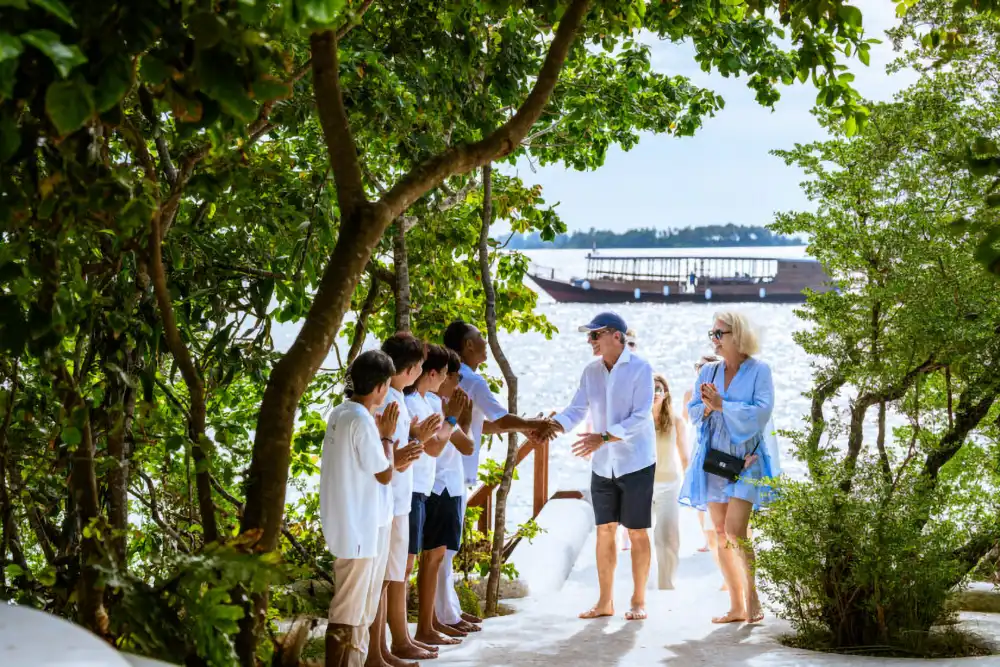
I’ve come to think that we, as travellers, have far more influence over the future of the reefs we love than we often realise.
Every time we spend money to dive, we are placing economic value on the ocean. So why not choose to spend that money somewhere that recognises the value of protecting its greatest natural asset?
Declaring an area protected does not necessarily make it so. Julia points to ‘paper parks’, where fishing and other pressures continue because there is little incentive or capacity to protect them. Real protection needs monitoring, community participation and funding. Dive tourism can be part of that solution.
Guest testimonials repeatedly mention warm staff, delicious food and diving. The Courtyard Residence adds its own team, chef and boat, allowing a family or small group to dive on their own schedule. Behind that hospitality, tourism supports hundreds of local jobs and helps fund conservation.
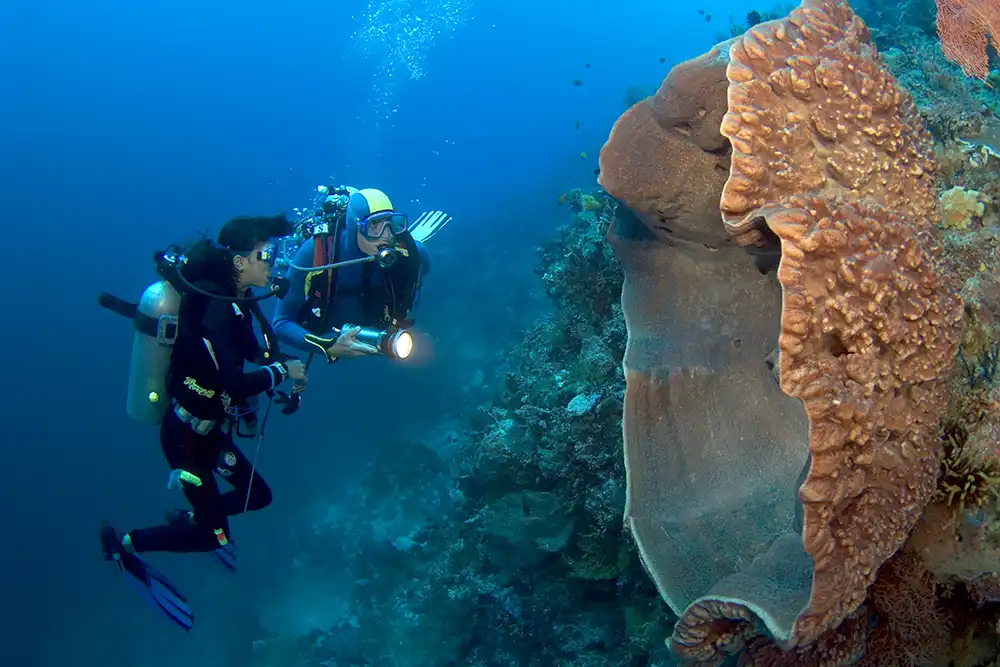
A healthy reef makes for great diving. Divers return, helping fund the protection that keeps it healthy. As Julia put it, ‘the proof is in the pudding.’
Kaye Richardson first visited in 2007. Returning nearly two decades later, she wrote, ‘Wow, wow, wow! I was here in 2007, and it was spectacular then.’ Having dived worldwide since 1992, her assessment was simple – ‘The diving! Unequaled – healthy reefs, abundant sea life.’
Other guests have returned two, five or more times, for the people, service, food and familiarity, but also for reefs that remain intact as healthy coral ecosystems become increasingly precious.
A diver can return years later, descend onto the same reef and still find the biodiversity that made them fall in love with it. That is worth travelling to see. And it is worth protecting.
After 30 years, perhaps Wakatobi’s simplest conservation lesson is this – create the conditions for nature to do what it does best, and then have the patience and discipline to leave it be.
See it for yourself
Email office@wakatobi.com or complete a quick trip enquiry and the Wakatobi team will help you put your trip together. Explore the Courtyard Residence at Wakatobi and follow along on Facebook and Instagram.
More from Wakatobi
- 30 years in the making – the spirit of Wakatobi becomes legacy
- Unbelievable beauty – the magic of Wakatobi’s house reef shallows
- The waters of Wakatobi are an artists’ muse
- All’s well at Wakatobi, says resident marine biologist Julia Mellers
- High-style diving on Wakatobi’s Pelagian – not your average liveaboard
