


A new, free, dive-logging app designed to turn recreational scuba dives into citizen science-generated marine biodiversity records has been launched by Dutch startup DIVR.
Created by Joep Weterman, a scuba instructor and econometrics master’s student, DIVR enables divers to log their dives, share photographs with buddies and record the species they encounter, with users able to opt in to sharing those observations for marine research.
At launch, the platform includes 5,659 dive sites across 136 countries and a catalogue of 4,558 marine species.
In order to make the identifications, DIVR presents divers with species checklists based on the region in which they are diving, rather than asking for a simple text entry.
Divers can record whether they saw single or multiple animals of a particular species, or whether they looked for a specific creature and did not see it, as information regarding an animal’s absence is often as important as its presence.
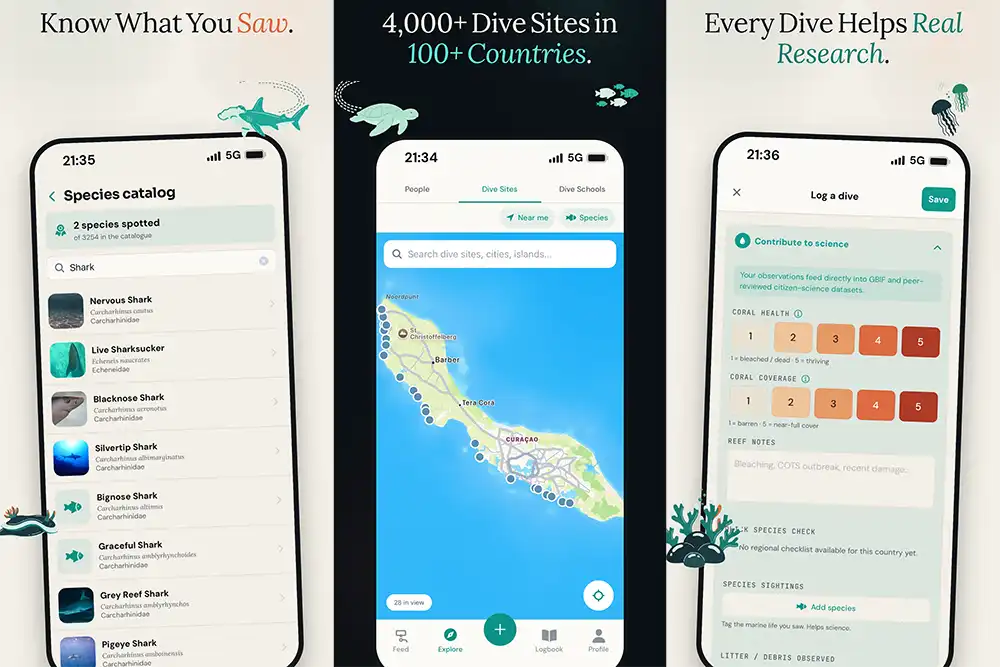
At the present time, the app does not use automatic image recognition or expert verification. Species identification remains with the diver, although photographs can be attached to sightings so records can be re-examined later.
Each species in DIVR’s catalogue is linked to an accepted AphiaID, the unique numerical identifier used by the World Register of Marine Species (WoRMS) for a taxonomic name.
Participating dive records are then structured using Darwin Core, the international standard for biodiversity data. A record can include the dive location, depth and duration, together with species observations and selected environmental information.
For those worried about privacy, the citizen-science sharing aspect of the DIVR app is optional and switched off by default.
Private dives are not exported to the database, and freshwater and other non-marine sites are excluded from the biodiversity dataset.
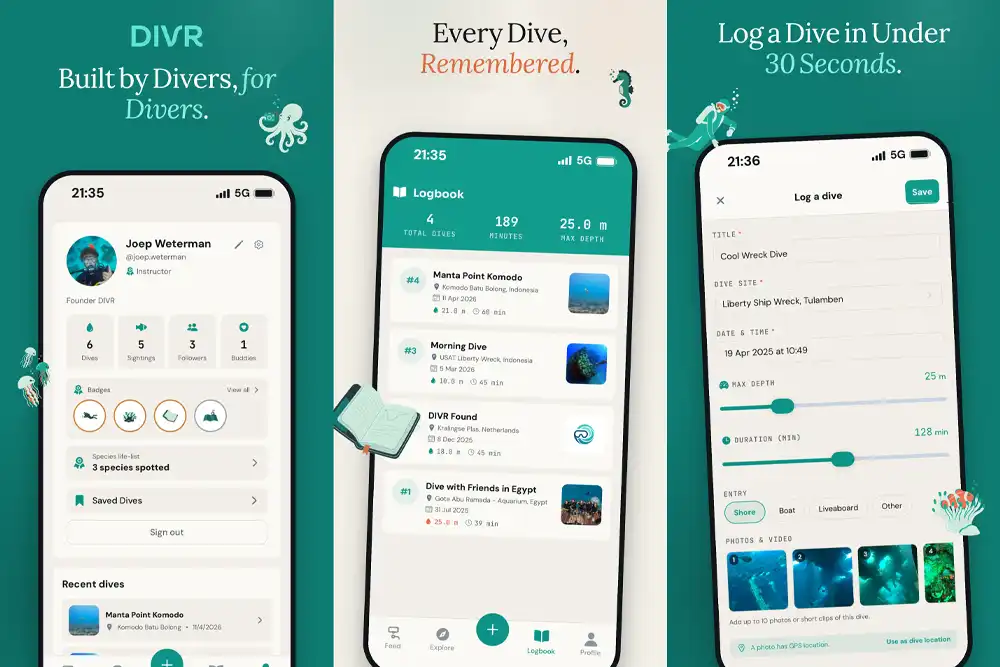
The project also acknowledges that recreational diving records have limitations, such as divers being more likely to log dives where interesting animals were spotted, rather than every creature spotted during an ordinary dive.
While the data recorded may not provide a complete overview of species presence and population trends, it will provide an extra source of data that, despite the popularity of scuba diving, remains unseen by most of the world.
As Weterman points out, ‘every diver has a drawer full of observations no scientist will ever read. Divers notice first what is changing underwater. DIVR makes sure those observations count.’
The DIVR app is free to use and is available on iOS and Android, and on the website at divr-connect.com. You can also get in touch via LinkedIn, or follow DIVR on Instagram @diver-connect and the DIVR Facebook page.


Related articles
