


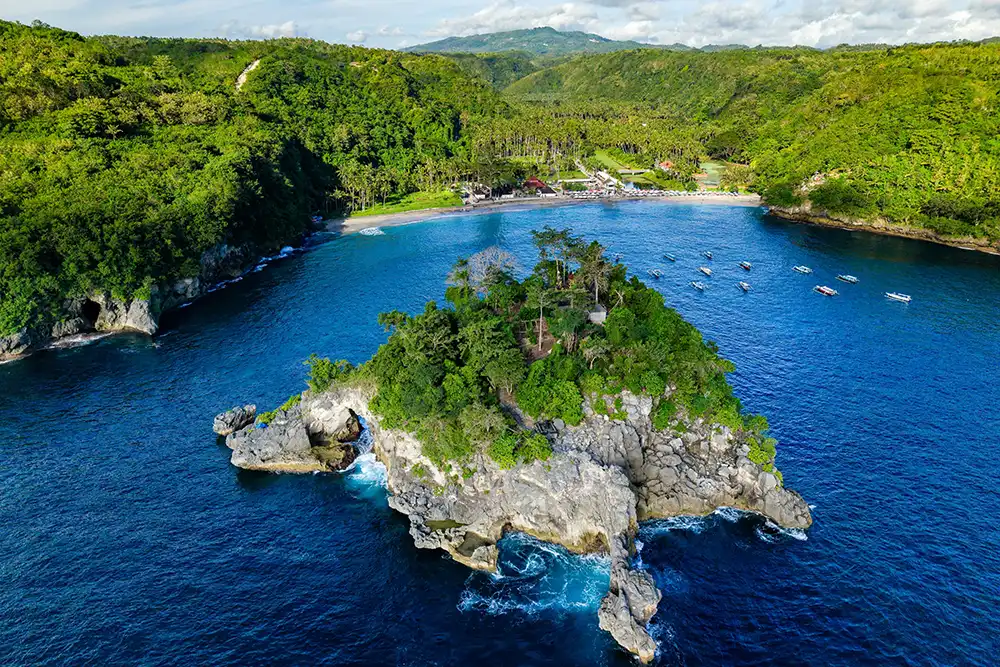
A 39-year-old Malaysian scuba diver has died after getting into difficulty during a dive at Crystal Bay, off Nusa Penida in Bali, Indonesia.
According to a statement from Bali Police, Siti Nuraini Binti Rusidi was diving with Dive Concepts Lembongan in Jungutbatu Village, Nusa Lembongan on 16 September when the tragedy occurred.

The group had made a previous dive at Manta Bay, to the east of Crystal Bay along Nusa Penida’s southern coast at around 8 am that morning.
Police said that the dive guide had noticed Siti coughing before the dive and asked if she was well enough to continue. She said that she felt well enough to get in the water and the first dive passed without incident.
The group moved to Crystal Bay at around 11 am, and the guide once again asked if Siti was okay to dive, offering her the option to remain on board.
Siti chose to make the second dive but became separated from her group in a strong current, which are common around Crystal Bay.
Siti was subsequently found tagged onto a separate dive team with a different guide. According to the police report, the guide saw Siti make an out-of-air signal and panic before removing her regulator from her mouth.
He gave her his alternate and brought her to the surface and onto the dive boat, at which point he ‘observed foam coming from the victim’s nose and mouth’, although she was still responsive at the time.
The boat headed back to Lembongan so that Siti could receive medical attention, but she had become unresponsive by the time they reached shore.
Staff from Nusa Medika Clinic met the group as they arrived and pronounced that she had died en route. Her body was later taken to Bali Mandara Hospital in Denpasar.
Nusa Penida Police said the exact cause of death remained under investigation. Detik Bali reported on 17 September that police had interviewed the dive guide, boat captain and other members of the group as part of the investigation.
Crystal Bay is one of the most popular dive sites on Nusa Penida, the largest of the three islands, including Lembongan and Ceningan, that are sometimes collectively called the Nusa Islands.
The site is renowned as a spot for seeing giant sunfish (Mola alexandrini) but is also subject to powerful currents, including dangerous downcurrents at certain times of the tide.
Related articles
- Penida dive instructor rescues entangled manta – again!
- Great white shark makes rare Nusa Penida appearance
- Australian scuba diver dies at Nusa Penida’s Manta Point
- Tourist killed by snorkel boat while off Nusa Lembongan, Bali
