


Cyprus is preparing to introduce its first dedicated regulatory system for recreational diving providers, with penalties of up to €8,000 or two years in prison for operating without a licence.
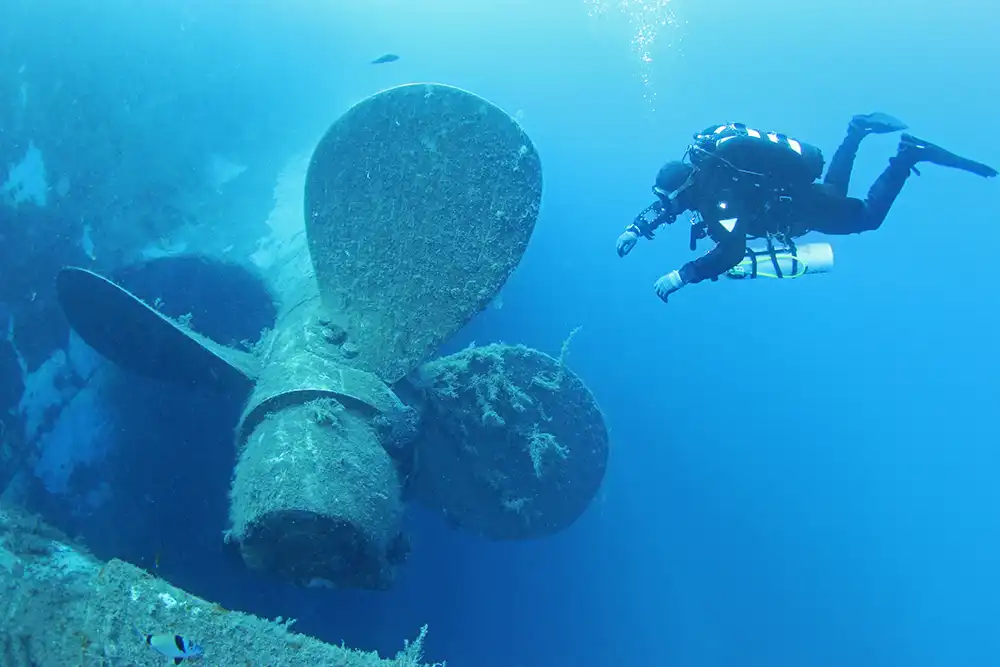
Despite more than 100,000 dives taking place in Cypriot waters, including more than 30,000 dives at the famous wreck of Zenobia, and 60,000 introductory dives around Protaras, the recreational diving industry in Cyprus has never been subject to a dedicated regulatory framework.
The proposed Diving and Recreational Diving Service Providers Law was discussed by the Cypriot parliament’s Energy, Commerce, Industry and Tourism Committee on Tuesday, 17 November, after the original bill was approved by the Cypriot Cabinet in November 2025 and submitted to the House of Representatives in March this year.
Although the announcement was made just one week after a 61-year-old British diver died on the wreck, there is no suggestion that the operator with which he was diving was responsible for his death, nor that the parliamentary discussion was brought forward as a result.
The bill is intended to close a longstanding gap in Cypriot law by establishing minimum safety and operating requirements for dive centres, training schools, independent instructors and businesses transporting divers by sea.
Licences would be issued by the Deputy Ministry of Tourism at a cost of €200 and remain valid for three years.
Providers would have to comply with ISO 24803, the international standard for recreational diving services, employ appropriately qualified instructors and carry professional liability insurance.
The bill would also establish a register of licensed operators and enable inspections of scuba diving businesses. Anyone convicted of providing recreational diving services without a licence could be fined up to €8,000, imprisoned for up to two years, or both.
A 2023 study commissioned by the Deputy Ministry of Tourism identified 86 dive centres and 69 dive sites around the island, including 17 wrecks and six artificial reef parks, although the official Cyprus tourism portal currently lists just eight businesses certified to ISO 24803.
Regulatory exemptions and considerations

The Cyprus Dive Centres Association (CDCA) has said that it supports the introduction of regulation but has objected to proposed exemptions for the Cyprus Federation of Underwater Activities (CFUA), its member clubs and other sporting organisations.
CFUA is similar to the British Sub-Aqua Club (BSAC) in some respects in that it is a national, club-based diving federation rather than a commercial enterprise, although it governs several competitive underwater sports, including freediving and spearfishing.
The CDCA argued that the same safety requirements should apply to any organisation offering diving instruction or other scuba-related services, regardless of whether it is a commercial business or a sports club.
CFUA defended the proposed distinction between its clubs and commercial operators, rejecting the CDCA’s suggestion that the exemptions would create unfair competition, arguing that its affiliated clubs operate on a non-profit basis, with their activities centred on training members and developing underwater sports rather than providing commercial diving services.
Dive centre representatives also said the bill does not adequately cover technical diving and freediving, despite both being offered by Cypriot operators.
Questions also remain over medical requirements, including whether a full medical examination should be required before every scuba diving excursion or try diving experience.
MPs also debated minimum levels of professional liability insurance, and the process under which the investigation of serious accidents would be conducted.
The proposed law would allow the Director-General of the Deputy Ministry of Tourism to appoint a special committee to investigate a serious diving incident. MPs questioned why such investigations would be discretionary rather than compulsory, while police representatives called for their own role to be more clearly defined.
The parliamentary committee has asked interested organisations to submit written comments before its detailed examination of the bill continues.
