


A 28-year-old Brazilian military police officer has died during dive training in Lake Paranoá, Brasília, with investigators examining whether pulmonary barotrauma was involved.
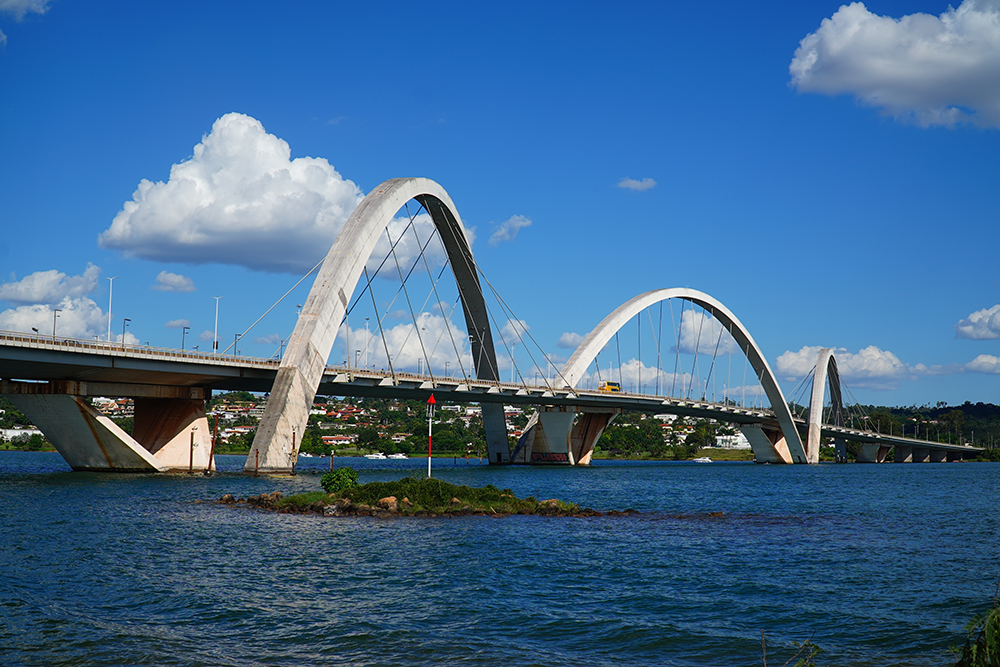
Lucas Duran da Silva, a soldier with the Federal District Environmental Military Police Battalion (BPMA), died on Monday, 21 September, during a routine training exercise near Lake Paranoá’s Juscelino Kubitschek (JK) Bridge.
According to the Federal District Military Police (PMDF), Duran and the officer accompanying him had both completed the Course of Lake Operations and were advanced divers with international certification to dive to depths of 40m.
The PMDF said Duran suffered a sudden medical event and became unconscious while submerged.
He was removed from the water by a colleague who began cardiopulmonary resuscitation before the Federal District Military Fire Department (CBMDF) took over, but Duran was pronounced dead at the scene.
Local news outlet Metrópoles subsequently reported that Duran had been carrying out training in breath-hold diving while another officer accompanied him using scuba gear.
According to the Metrópoles account, Duran took a breath from his companion’s alternate air supply before beginning his ascent.
The support diver reportedly surfaced to find his colleague had not surfaced with him, and began a search. Duran was found unresponsive underwater a short time later
Preliminary information from the Federal District Civil Police (PCDF) indicated that barotrauma was being considered as a possible cause of death, potentially caused by the freediver holding his breath on ascent after breathing pressurised gas from his colleague’s regulator.
The PCDF stressed that the suspicion remained preliminary and that the cause would be determined after a post-mortem examination was completed.
Pulmonary barotrauma, also known as a lung-overexpansion injury, occurs when expanding gas in the lungs is not properly exhaled by the diver.
A rupture in lung tissue can force gas into the blood system, leading to an arterial gas embolism (AGE), a potentially fatal complication as blood flow is blocked by gas bubbles within the brain or other vital organs.
Freedivers are not normally exposed to the same risk as scuba divers, as the volume of air they breathe at the surface shrinks during descent and expands to its original volume during ascent.
Failing to exhale during ascent after breathing compressed air at depth, however, will lead to severe injury.
Although no official cause of death has been given as yet, the PMDF said it had opened a Military Police Inquiry into Duran’s death and had begun taking statements from those involved.
Related articles
