



Expert underwater photographer Richard Aspinall takes a look at how to get the best images you can, by planning ahead and being prepared.
Returning home from a dive trip with memory cards packed full of colourful images of reefs, moody shots of wrecks, and video of encounters with impressive marine life is super rewarding.
Whether you’re a fan of sharing images on social media or you want large and impressive prints on your walls, a photography trip is an investment, and we all want to see a return on our time and money.
A dive trip can take up a lot of your vacation time and budget. Every dive is valuable and every moment on a dive can be a chance to take an incredible image you’ll treasure forever.

The very last thing you want is to be on the reef, witnessing something remarkable and find you have a camera issue. From a simple error like selecting the wrong focus mode to a catastrophic flooding, there’s nothing like a camera disaster to ruin your vacation.
Can all camera mishaps be avoided? Maybe not all, but on a good boat and with careful planning and preparation, the chances of getting the best shot of the trip can be much improved.
By choosing any of Aggressor Adventures‘ itineraries, be that Liveaboard, River Cruise or Signature Lodge, you’ve selected a brand with an excellent reputation. Aggressor can organise your flights, your transfers, hotel stays and even onward travel. Knowing that all of the details and logistics are taken care of is very reassuring.
You’ll arrive at your destination far more relaxed and ready to enjoy yourself and be in the water refreshed for your first dive. Here are my recommendations, in no particular order, to make your Aggressor Adventures photography trip run much more smoothly.
More from Aggressor
- Discovering new dive sites on board the Raja Ampat Aggressor
- Diving the Similan Islands with Aggressor Adventures
- Diving Coral Triangle diversity with the Philippines Aggressor
- Aggressor Adventures launches three new liveaboards
- New Red Sea Aggressor V to explore Egypt’s Deep South
Servicing, spare parts and maintenance
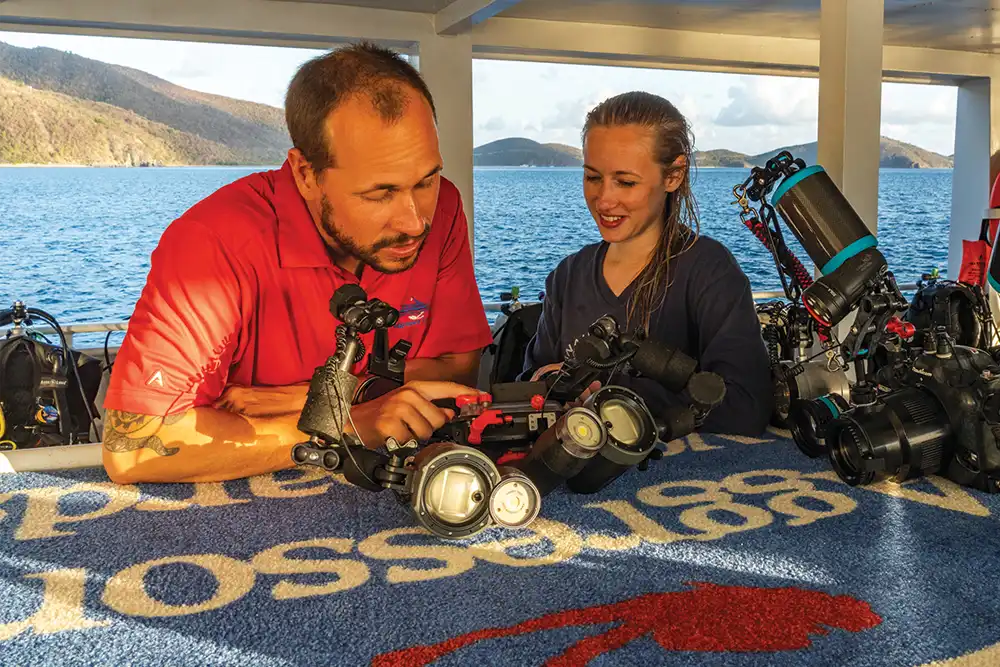
It’s a good idea to check over dive and camera gear weeks before heading to the airport – it can take a long time to order a spare part or get something serviced, especially if the spares are out of stock or need to be shipped from overseas.
Aggressor yachts regularly have photo professionals on board who can offer advice should you have issues, but it’s best to avoid mechanical failures at sea.
Make sure you arrive on the yacht with everything working, and don’t forget basic maintenance like checking and lubricating your housing’s o-rings! I always carry spare o-rings, grease, super glue and some basic tools, just in case.
Check dives
The crew will select an easy-going site for your check dive, but you might want to leave your camera on the yacht for this.
A check dive is a chance to check your weighting and buoyancy, make sure your gear is fully functioning, and ensure you can deploy your dSMB.
It’s an investment in making sure you’re comfortable in the water, so that later on, when you’re on a more challenging dive and carrying your camera, you’re not over-weighted and you’ve dealt with equipment issues.
Simply put, after a good check dive, you can put more of your attention into your camera, the reef around you and your buddy.

Talk with the crew
Aggressor crews are well-practised in dealing with dive cameras, from compacts to large professional rigs.
On each of the twenty-two Aggressor liveaboard yachts, the crews are trained in how to handle camera gear and when you pass your rig from the tender, or up from the dive ladder, they’ll ensure it’s taken care of.
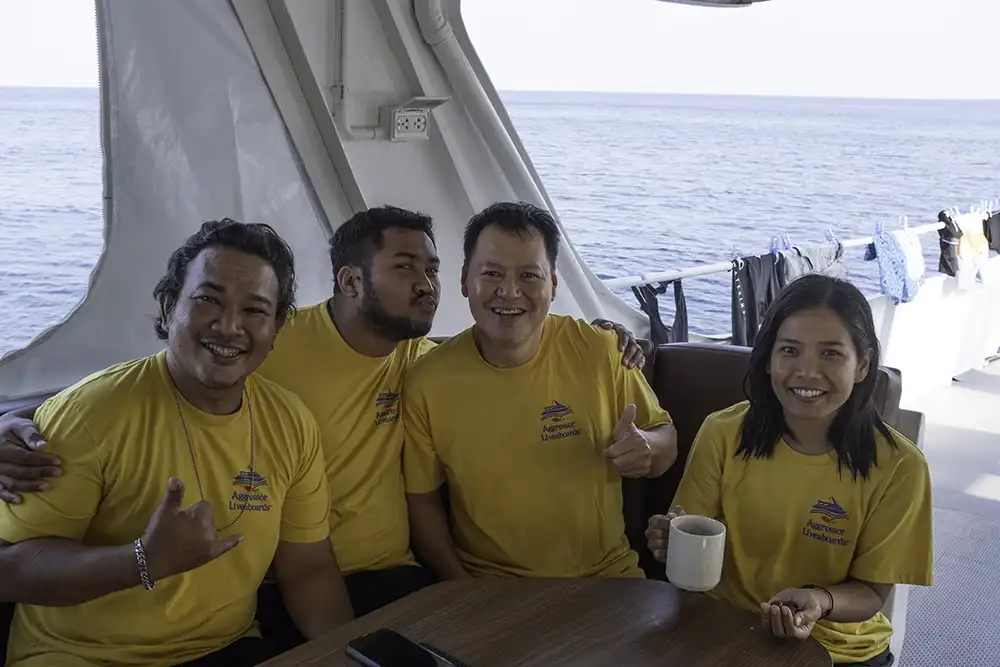
Feel free to talk to the guides if you have any special handling requests. Cameras are normally rinsed and placed on the camera table by the crew, but it is okay if you need something different.
The crew work hard and they have a lot to do, so helping them help you makes everyone’s day go more smoothly.
Practice makes perfect
Practising with your camera before you leave home can really help. Even just an hour in a shallow pool shooting a plastic Nemo aquarium ornament will help refresh and hone your skills.
Practice your framing and composition, adjust your focus point, use manual settings to adjust depth-of-field, switch between photo and video… the list is pretty long!

Even if you can’t get your camera wet, you can practise as many scenarios as possible on land. My dogs often play the role of a seal or turtle when I’m practising at home.
Leak detector
The best piece of kit I ever invested in was a vacuum leak detector. This wonderful device, with the aid of a vacuum pump, detects pressure changes within a camera housing and will flash a red LED and emit a beep if all is not well.
Leak detectors show you don’t have a leak on the surface – when only air can seep into your housing – so you know you’ll hit the water with a sealed housing. Any issues can be sorted before the dive!

All Aggressor yachts have large charging areas, which are kept dry and are ideal for setting up your kit and performing checks. Assembling often complicated camera rigs in a rush or in cramped surroundings is to be avoided.
Take your time and use the space Aggressor yachts offer.
Ask the pros
While Aggressor staff will happily work with you to help you take better images, they are, at the same time, assisting a number of guests or shooting video of everyone enjoying themselves.

For more personalised learning, you can try one of Aggressor Adventures’ Mike and Mike Underwater Photography Charters, where photo pros Mike Haber and Mike Mesgleski offer week-long courses on the superb Aggressor yachts in the crystal-clear Caribbean.
The courses cover everything, from the basics to digital darkroom skills.
Get your rig right
One factor we sometimes overlook is how we carry our camera gear underwater. My large rig is always clipped to me, and I ensure that at the end of the dive, it is clipped close and not left to dangle or drag on the reef or get in the way when I’m deploying my dSMB.
Another factor that large camera users need to contend with is buoyancy. Some professional rigs can generate significant positive or negative buoyancy that makes shooting physically harder, especially when shooting macro.

Different port combinations can require the addition of floats or, in some cases, small weights, as well as swapping out strobe arms if they are the floating variety.
My rig has a tendency to rotate around its axis when I use an eight-inch dome port and become a little positively buoyant. Conversely, my macro port causes rotation in the other direction, dropping the front end.
For delicate macro work, where the subject, like this Whip-coral Goby, is moving in the current, you need to be in control of your buoyancy.
Capturing detail using super-macro requires good buoyancy and camera control.
Fit to dive? Diet before you arrive!
I’ve stressed the need to prepare your kit, but have you prepared yourself? Three or four dives a day can be tiring, especially if you’re not as physically active as you once were, so you might find a dive trip harder work than you imagined.

My advice would be to try to stay trim and healthy before your trip, as Aggressor yachts are not the place to diet!
Food aboard Aggressor yachts is always excellent; snacks are also plentiful, and soft drinks and alcoholic beverages are readily available (in moderation and never before a dive, of course!)
Research your destination and listen to briefings
Another way to prepare is to research your destination. Aggressor guides will give you informative and comprehensive briefings before each dive, but you might want to read up a little on your destination’s history and culture and perhaps more detail on any shipwrecks you’ll dive.
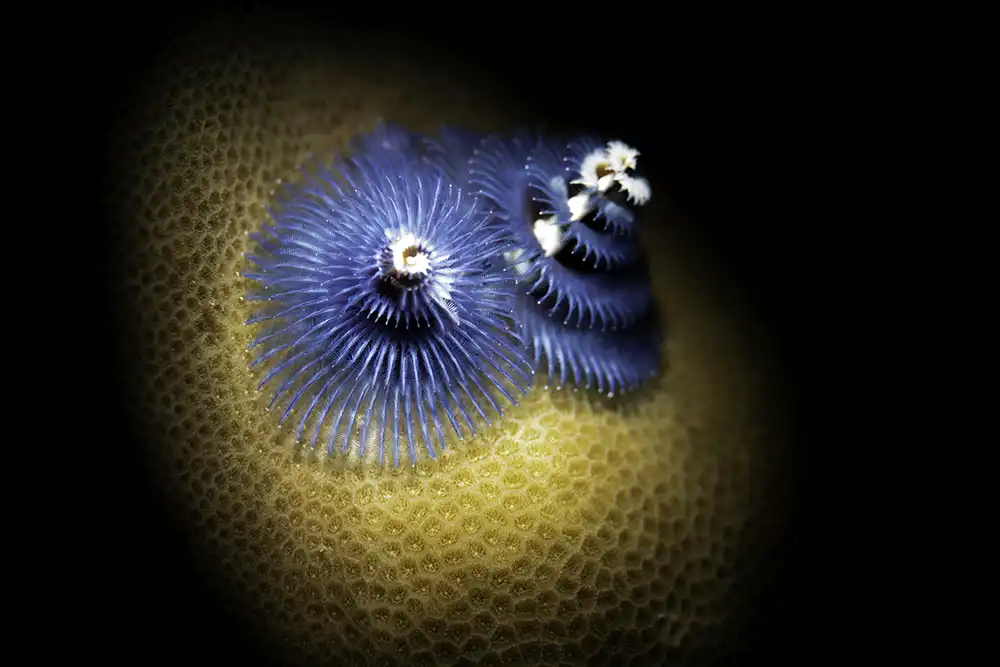
I’m fascinated by biology and will often seek out a guidebook to the local marine life. I especially look for the creatures endemic to the region. These are the species found nowhere else.

Guides will often mention where interesting animals can be found, especially if they know you are interested.
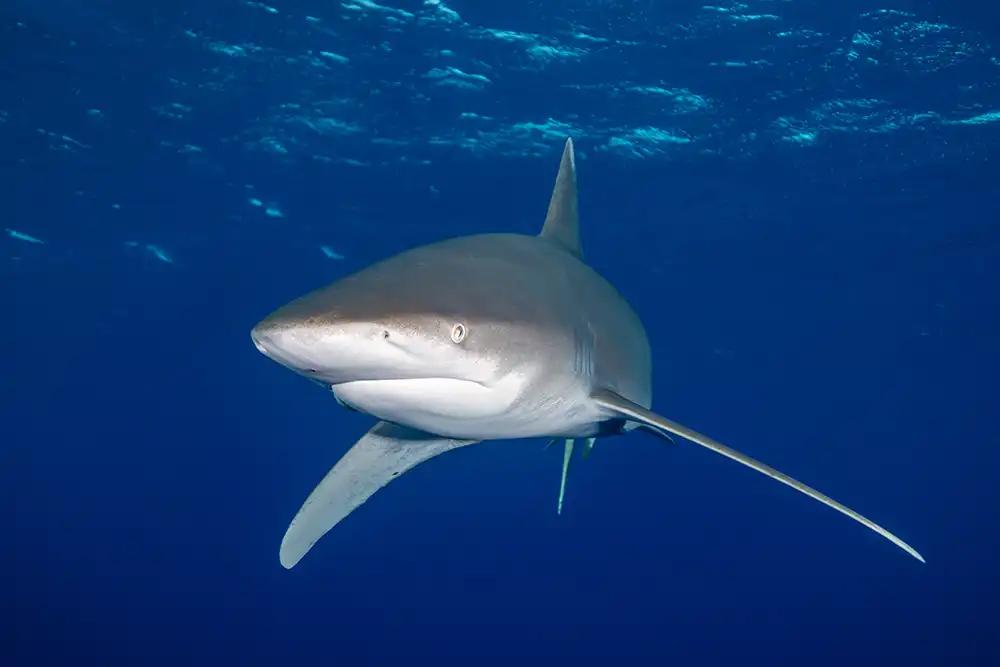
I often ask the guides for an overview of what each dive of the day might offer so I can plan ahead for which lens/port combination I’ll choose, and most Aggressor guides will be able to suggest whether you should be shooting wide or macro, in advance
Listening to the briefing will ensure you get the best from a dive. Exploring wrecks like this one in the Red Sea aboard the Red Sea Aggressor II only works well if you know where you’re going and you can plan your image-making beforehand.
Love your buddy
The last – and perhaps most important – advice I’d offer is to value your buddy. A photographer’s buddy sometimes needs a great deal of patience as they wait around for you to get the perfect shot of a nudibranch or for the shoal of Jacks to swim past in just the right way.
Some buddies are happy to play spotter or pose for you, but don’t take your buddy for granted. Even if you both have cameras you still need to remember the rules of diving. Demonstrating you are both safe and competent in the water will mean the guide trusts you to do your ‘thing’.
You should also carry the full range of safety equipment. Carrying a camera doesn’t mean you leave your safety to others.

Dive trips, be they land-based, on a liveaboard, or a combination of both, with Aggressor Adventures organising it all for you, can be life-changing – especially if you’re at the beginning of your scuba diving journey.
You’ll find well-travelled and experienced divers choose Aggressor yachts time and time again, knowing they’ll encounter service to a standard they’ve come to trust and rely on.
To start planning your Aggressor Adventure, head to www.aggressor.com
