


A new shark repellent fishing hook developed by researchers at Florida Atlantic University (FAU) may significantly reduce shark bycatch in longline fisheries, according to a new study published in the Canadian Journal of Fisheries and Aquatic Sciences.
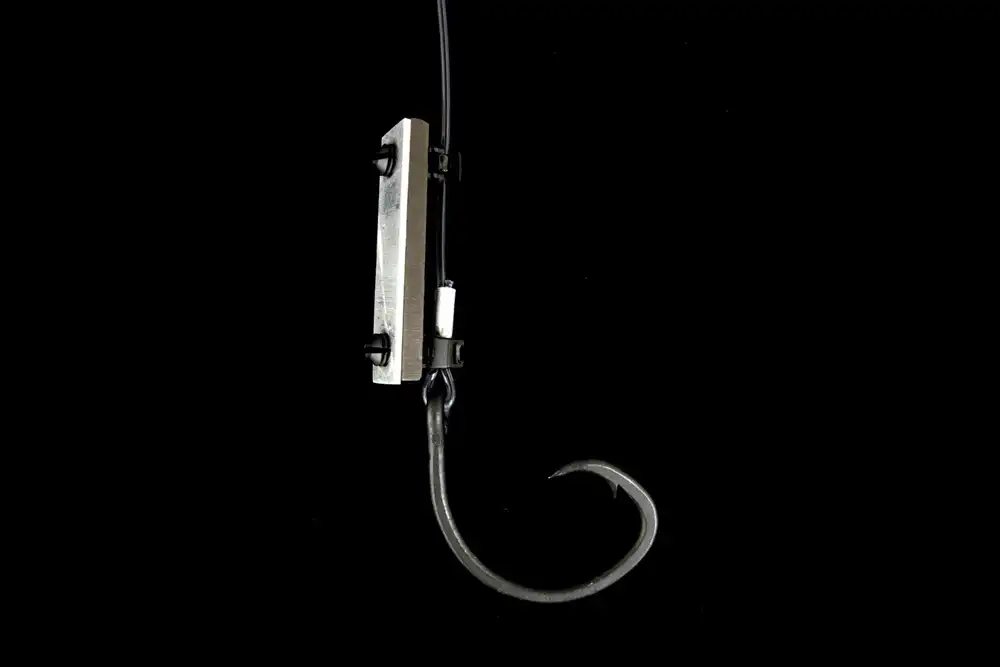
The device works by pairing two common metals – zinc and graphite – on a standard fishing hook. When submerged in seawater, the metals interact to generate a weak galvanic electric field.
Sharks are highly sensitive to electrical signals, detecting them through specialised electroreceptors known as the ampullae of Lorenzini, and instinctively avoid the field produced by the treated hooks.
Bony fish such as tuna and swordfish, which lack the same electroreceptive sensitivity, do not respond to the electric field in the same way.
The scientists behind the study say that, in theory, this means the deterrent will repel sharks without reducing the catch rates of commercially valuable target species.
In controlled field trials conducted off the coast of Florida and Massachusetts, hooks fitted with the zinc-graphite pairing reduced shark bycatch by between 62 and 70 per cent compared with untreated gear.
The strongest responses were recorded among coastal species, including Atlantic sharpnose (Rhizoprionodon terraenovae) and blacktip sharks (Carcharhinus limbatus).
By way of contrast, the researchers reported no statistically significant decline in the catch of target teleost (bony) species.
‘Sharks have an incredible ability to sense even the smallest electric fields, and our tests show that this new approach can be used to keep them away from baited hooks,’ said Stephen Kajiura, professor at the FAU Department of Biological Sciences.
‘At the same time, important target species like tuna and swordfish are completely unaffected. What makes this approach so exciting is its practicality – zinc and graphite are inexpensive, widely available, and already familiar to fishers because zinc is commonly used to prevent corrosion on boats.
‘This means it could be adopted quickly and cost-effectively, providing a real solution to reduce shark bycatch while supporting sustainable fisheries.’
Longline fisheries deploy thousands of baited hooks across wide areas of ocean and are responsible for the indiscriminate catch of many different species, including sharks, dolphins and turtles.
Globally, many shark populations are under pressure from legal and illegal fishing and habitat destruction, which, together with their slow reproductive rates, make bycatch mitigation a priority for shark conservation.
Previous attempts to deter sharks from longlines have included magnets and battery-powered devices, but these have often proved expensive, impractical at scale or ineffective across multiple species.
The new system requires no external power source, as the electric field is generated naturally by the chemical reaction between zinc and graphite in seawater, and both materials are inexpensive and already widely used in marine environments.
The scientists say that further testing in pelagic longline fisheries will be needed to determine whether similar reductions can be achieved at a commercial scale.
If the results are replicated in such large operations, the graphite and zinc device could offer a relatively simple, low-cost means of reducing shark mortality while simultaneously maintaining the economic viability of commercial fisheries.
‘Our approach could be scaled up to pelagic longline fisheries, where millions of sharks are caught as bycatch annually,’ said Kajiura.
‘Even a 60 per cent to 70 per cent reduction in shark bycatch, like that observed in Florida trials, could have a dramatic impact on global shark populations.
‘The zinc/graphite treatment offers a practical, affordable and environmentally responsible tool for reducing shark bycatch while maintaining commercial catch rates.’
The complete study, ‘Efficacy of a novel galvanic shark deterrent to reduce catch of elasmobranchs in longline fisheries,’ by Stephen M Kajiura et al, is published in the Canadian Journal of Fisheries and Aquatic Sciences.
Related articles

- DIVE’s Big Shot In Your Face – win an Aggressor Adventures liveaboard trip - 21 October 2026
- Malaysia Scuba Diving Association urges divers to prioritise safety over bookings - 20 October 2026
- Underwater Magic – an extract from Michal Štros’ new book - 19 October 2026
