


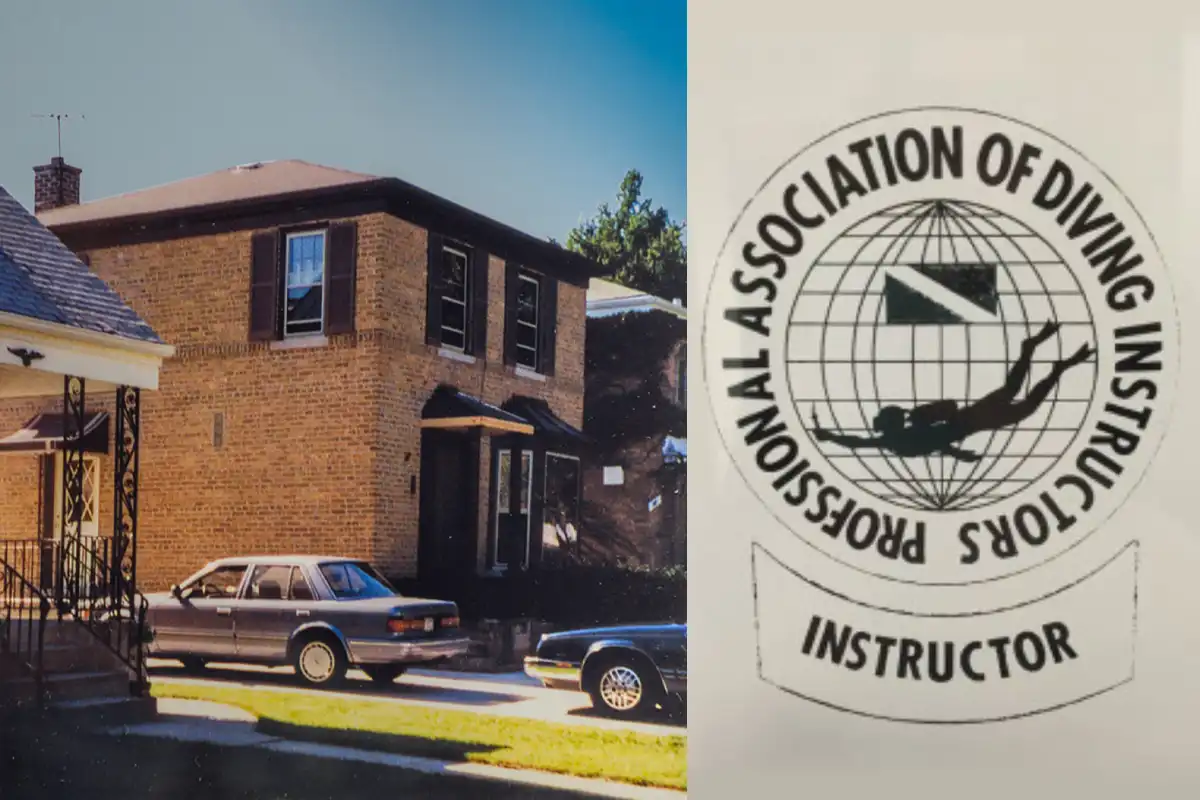
The Professional Association of Diving Instructors (PADI) is this year marking its 60th anniversary since its founding by John Cronin and Ralph Erickson in 1966.
What began in a small Illinois apartment with $30 and a glass of Jonny Walker Black Label whisky has since grown into the world’s largest diver training agency.
PADI’s global membership now comprises around 128,000 professionals and 6,600 dive centres and resorts operating in more than 180 countries, with more than 30 million diver certifications issued in the last six decades.
‘Sixty years ago, a torch was lit, and a movement was born beneath the sea,’ said Dr Drew Richardson, President and CEO of PADI Worldwide. ‘Since then, we have built upon that legacy with the same spirit of adventure, friendship, and purpose that began the dream of bringing the world closer to the ocean, one diver at a time.
‘This year, we celebrate the progress that we have made towards our mission to create a billion Torchbearers to explore and protect the ocean together.’
Leadership and conservation focus
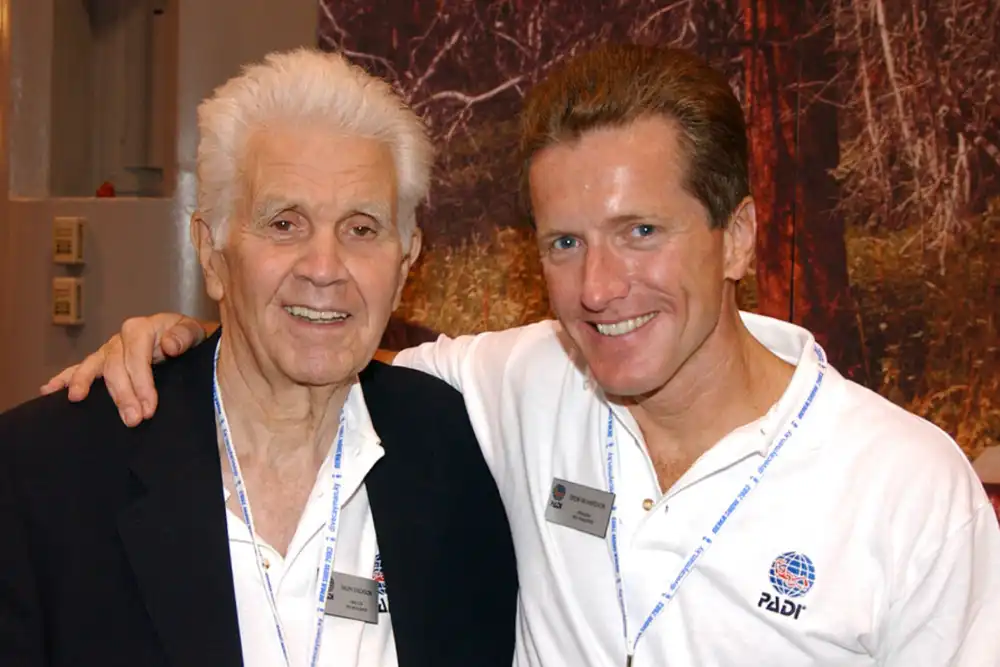
Richardson took over leadership of PADI in 2003 and marks his own 40th year with the organisation in 2026. During his tenure, PADI has expanded its focus beyond diver training into conservation initiatives delivered through PADI AWARE and the PADI Foundation.
In 2016, the organisation adopted the tagline Seek Adventure. Save the Ocean, alongside what it describes as a mission to create a billion ‘Torchbearers’ to support ocean protection. It also introduced its Pillars of Ocean Change framework, aimed at coordinating conservation activity across its global membership.
Since the introduction of those programmes, PADI has provided more than USD $6 million in grants supporting marine research, science and education.
The training agency’s members have taken part in more than 350,000 local conservation initiatives, contributed to the protection of more than 100 shark and ray species, and assisted in the removal of more than 2.5 million pieces of marine debris.
PADI also reports that its divers have helped untangle more than 41,000 marine animals and have adopted and monitored more than 3,300 dive sites worldwide.
‘The PADI cultural diaspora is, de facto, a juggernaut – we are a force for good,’ said Richardson. ‘PADI is built on the premise that no constructive personal action is insignificant, and we are all empowered to make a difference by taking action.’
Sixty years of training milestones
PADI says its growth over the past six decades has been driven by changes in diver education, safety standards and training delivery, including the introduction of modular courses, continuing education pathways and digital learning.
‘Founded by divers for divers, PADI is an organisation that has long been obsessed with transforming lives and creating positive ocean change by making the underwater world accessible to all,’ Richardson said.
‘Since the very beginning, the global PADI membership has inspired millions to dive with confidence and purpose, teach others, elevate diver safety, and carry the torch. And with each new diver we certify, we add to our ability to lift the seas and each other.’
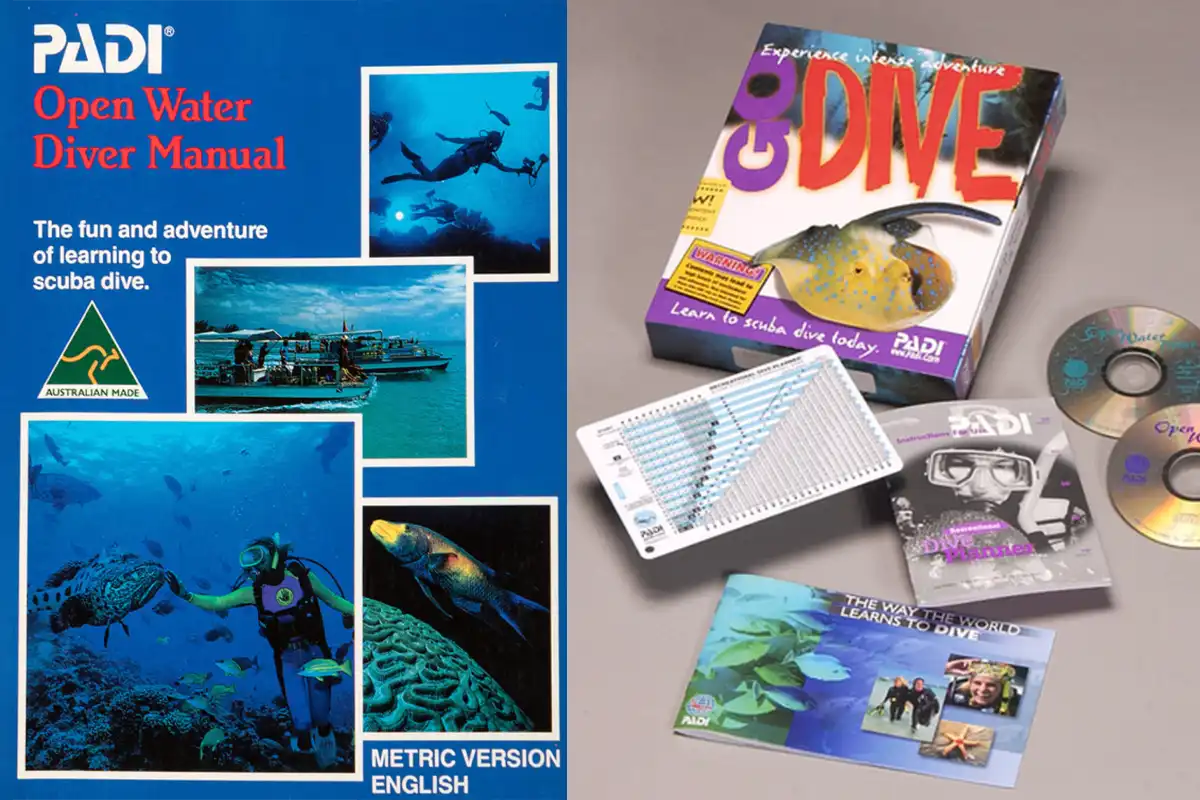
Key milestones throughout the organisation’s history include:
- 1960s: PADI was founded and issued its first certification (1966), developed the PADI Continuing Education system, launched The Undersea Journal (1967), and created the PADI Positive ID Card with diver photographs (1968).
- 1970s: creation of the Master Scuba Diver ranking (1973), introduction of the modular scuba programme (1978), and issuing 100,000 certifications annually by 1979.
- 1980s: publication of the Encyclopedia of Recreational Diving, introduction of the Recreational Dive Planner (1988), and establishment of the PADI AWARE Foundation (1989).
- 1990s: release of VHS training materials for Open Water Diver courses, issuing more than 500,000 certifications annually (1991), and introduction of enriched air nitrox (EANx) as a standard recreational option (1995).
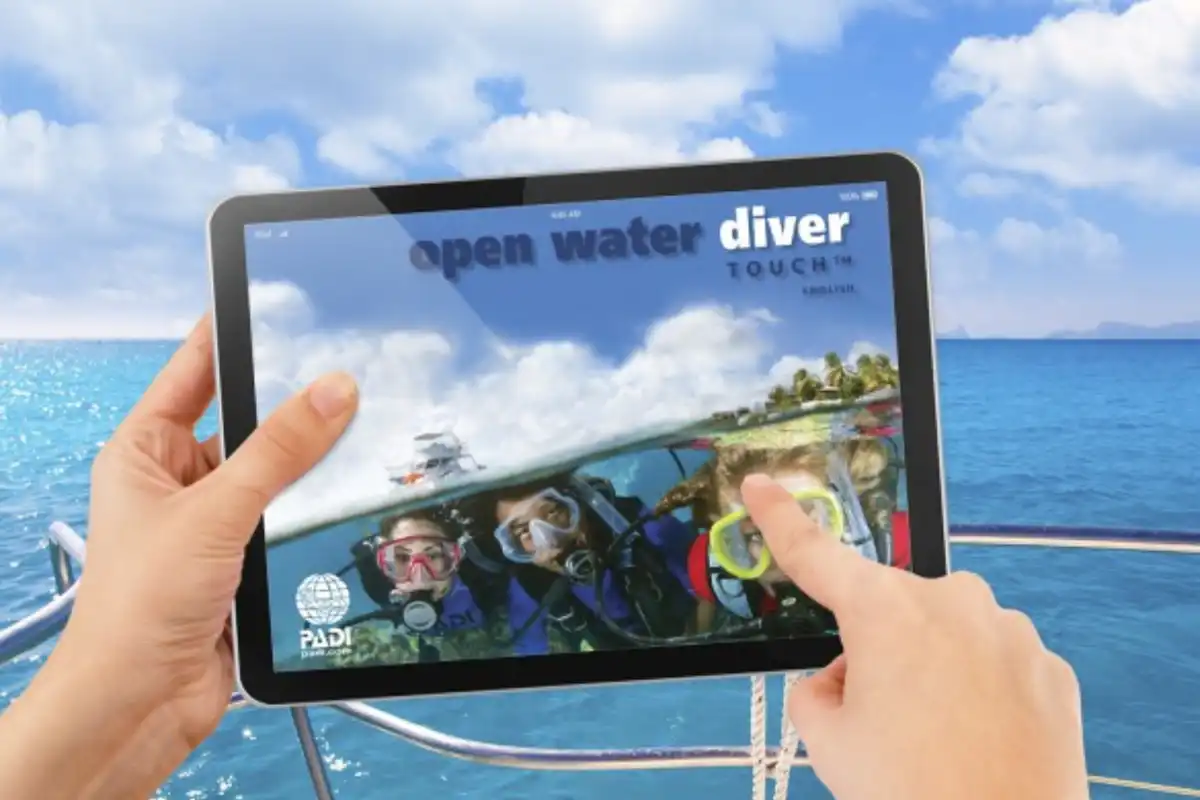
- 2000s: launch of the TecRec programme (2000), introduction of the PADI Seal Team for young divers (2001), and the first eLearning diving courses (2007).
- 2010s: launch of PADI Women’s Dive Day (2015), introduction of the Adaptive Diving programme (2017), establishment of PADI Travel, acquisition of Scuba Diving magazine, and reaching one million certifications issued annually (2018).
- 2020s: launch of PADI Adventures and Dive Guides (2020), introduction of the PADI Blueprint for Ocean Action (2021), conservation partnerships supporting CITES protection for requiem sharks (2022), establishment of PADI Eco Centers and Adaptive Service Facilities (2023), industry recognition from Fast Company and Condé Nast Traveler (2024), launch of the PADI App and Conservation Action Portal (2025), and the Global Shark and Ray Census (2026).
Looking ahead
Marking the anniversary, Richardson said the organisation is now focused on long-term growth and conservation goals.
‘I’m excited about the future of PADI, because we’re on the brink of something big,’ he said. ‘I see a future of optimism, one that includes all of working together to inspire the next generations of ocean advocates.’
‘Humanity and the ocean are both vulnerable, both codependent. Divers are a fortunate group of people who understand this. I see a future where one billion people think and feel this way.
‘This is the art of the possible and what PADI is determined to achieve. Together, we will create positive ocean change.’
For more from PADI, visit the website at www.padi.com follow along on Facebook @PADI, X @PADI and Instagram @padi
Related articles
