


A 52-year-old diver who died after surfacing from a training dive at Capernwray Diving Centre in Lancashire was suffering from immersion pulmonary oedema (IPO), a coroner has concluded.
The news follows in the wake of a similar finding following the inquest into the death of an experienced technical diver off the coast of Donegal, Ireland, in 2024.
Mark Powell, a private landlord from Cumbria, was taking part in the first day of an Advanced Open Water course at the inland quarry site near Carnforth on 3 May 2025.
At Preston Coroners’ Court on 30 April 2026, as reported by LancsLive, area coroner Kate Bisset heard that Powell had completed two dives in the morning with a group of four students.
After lunch, he entered the water with divemaster Nicola Hopkins for the third dive of the course, which involved descending 18 metres to one of the lake’s submerged aircraft wrecks.
The pair began their ascent when Powell reached 70 bar of air in his tank, and at some point during the ascent, Hopkins offered Powell her alternate air source. Everything otherwise appeared normal until they reached the surface, at which point Powell began calling for help.
Hopkins instructed him to inflate his BCD, but as panic set in, Powell pulled her under the surface, causing her to swallow water, before he sank out of sight.
Hopkins and an experienced diver, Jak Spedding, who had witnessed the incident unfolding and jumped in to help, recovered Powell from the quarry’s bottom. CCTV showed he had been at the surface for around 58 seconds and was brought back up within three minutes of sinking.
Attempts to revive him with CPR and a defibrillator were unsuccessful. He was pronounced dead at the Royal Lancaster Infirmary.
A post-mortem examination found no evidence of drowning. The cause of death was immersion pulmonary oedema (IPO), with no water found in his airways or lungs.
Instructor-trainer David Keany, supervising the training from the surface, told the court he saw Powell start shouting and thrashing. ‘It threw me a bit because he was at the surface,’ he said.
‘It just looked like they had come to the surface, nothing seemed out of the ordinary at first,’ added Keany, ‘then after a few seconds Mark started shouting – he was panicking.
‘I shouted instructions to Nicola, but she was already doing what she needed to do. He was panicking and thrashing around.
‘At one point he pushed her under the water and when she got dunked she got a mouthful of water. It all happened in a matter of seconds.’
HSE investigation
Immersion Pulmonary Oedema (IPO, or IPE for the US spelling ‘edema’) is a condition in which the lungs spontaneously fill with fluid, leading to hypoxia, which can eventually prove fatal.
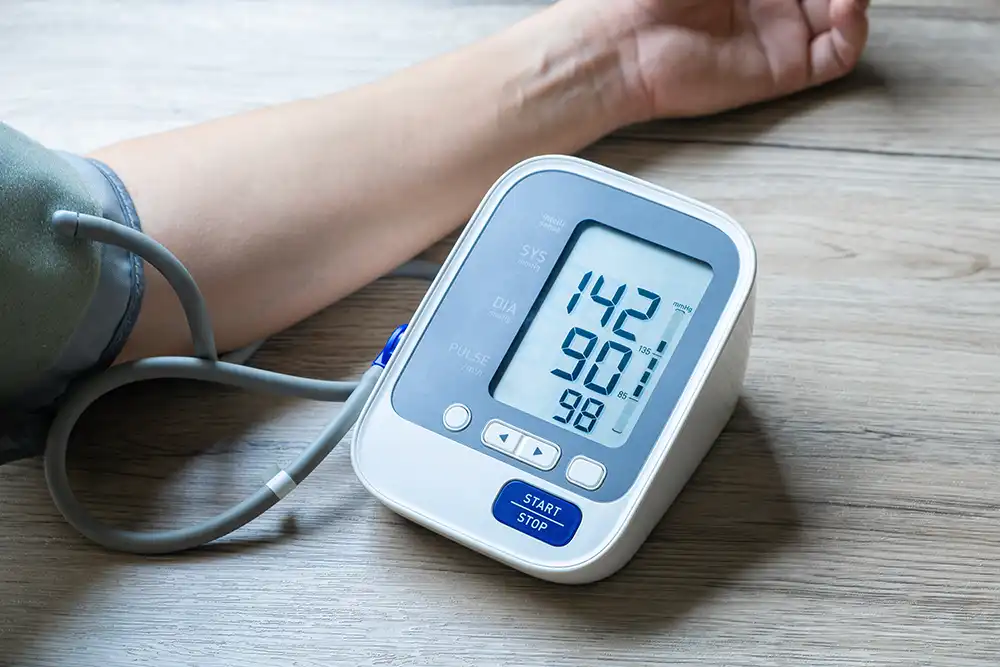
People with hypertension (high blood pressure) are particularly susceptible, especially in conjunction with overexertion when diving in cold water.
Symptoms include difficulty breathing and confusion, with victims appearing to believe they may be suffering an out-of-air incident or equipment failure.
IPO is survivable if caught early, but immediate removal from the water is essential, and the condition can worsen during ascent.
Health & Safety Executive diving inspector Jules Tuvey described IPO as ‘the most common cause of diving fatalities’, saying that people with the condition ‘hit the surface and panic because you think you’ll be able to breathe better but the problem only worsens as the pressure decreases’.
Mr Tuvey commended the actions of Hopkins and Keany, and said he had found no regulatory breaches by the dive professionals, noting that Powell’s equipment had functioned correctly, and he had sufficient air for a normal ascent.
Recording her verdict, Coroner Kate Bisset returned a narrative conclusion to the inquest, meaning that no fault could be attributed to any individual present during the incident.

‘The law requires me to find as fact any act or omission which contributed to death,’ said Bisset. ‘ I can find none on the evidence available to me.
‘I am satisfied that Mark had sufficient oxygen for the dive. He made it to the surface with the equipment he had which indicates his equipment worked.
‘I am satisfied he had no ingested water on his ascent because I would expect his surfacing to involve coughing if he had water in his lungs and it didn’t.
‘There is no evidence that the ascent was faster than it ought to have been nor evidence that if it was faster that would have played a role.
‘I suspect, though we will never know, the most likely event was that Mark felt he was struggling for oxygen, hence accepting the regulator of Nicola Hopkins and expected relief when he surfaced.
‘Given we know now that he was suffering from immersion pulmonary oedema, he would have still struggled to breathe and in the consequence of the lack of oxygen he was not able to think rationally about the next steps.’
‘I also note the evidence of Dr Beardmore that death is said to occur rapidly which means there was little time for reaction. The CCTV indicates the time from surfacing to Mark going under was around 58 seconds.
‘The time from him going under to being brought up by rescuers was 2 minutes 55 seconds. It all happened tragically quickly.’
Related articles
