


Six species of comb jellies have been recorded in Colombian waters for the first time following a comprehensive inventory of ctenophores in the Caribbean and Pacific.
Published in Revista de la Academia Colombiana de Ciencias Exactas, Físicas y Naturales (2026), the study presents a checklist of Colombian ctenophores and documents six new national records based on in situ photography and direct observation.
Led by researchers from Colombia’s marine research institute INVEMAR, the study combines material gathered during a 2022 National Geographic Pristine Seas expedition with photographs provided by members of the public, highlighting the importance of citizen science in the collection of species data.
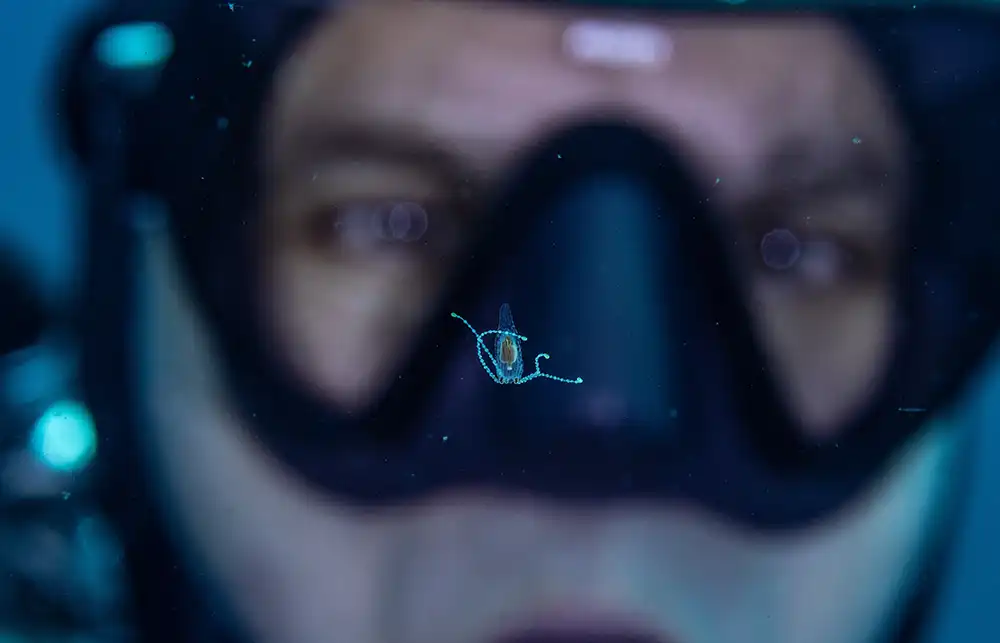
Comb jellies, also known as sea gooseberries, sea walnuts and Venus’s girdles, are an ancient group of gelatinous plankton found in oceans worldwide, from shallow coastal waters to deep ocean trenches.
They move using rows of beating cilia that refract light, and many species are bioluminescent, emitting blue, green or red light in dark waters.
Despite their delicate appearance, comb jellies are active predators, feeding on zooplankton, larvae and fish eggs, and are in turn preyed upon by turtles and crustaceans.
Study of the various species is complicated by the fact that they are mostly composed of water and collapse when removed from the sea, making them difficult to collect and preserve. As a result, significant gaps remain in understanding the diversity and distribution of comb jellies throughout the world’s oceans.

Juan Mayorga, a co-author of the study and marine scientist with Pristine Seas, said the work shows how photography can help to support taxonomical studies.
‘These fragile organisms dissolve when collected in nets, so they can only be studied through images,’ he said. ‘Our team’s photography didn’t just document beauty; it enabled taxonomy and discovery, resulting in six new species records for Colombia.’
Cristina Cedeño-Posso of INVEMAR, lead author of the study, said the research helps address a longstanding information gap.
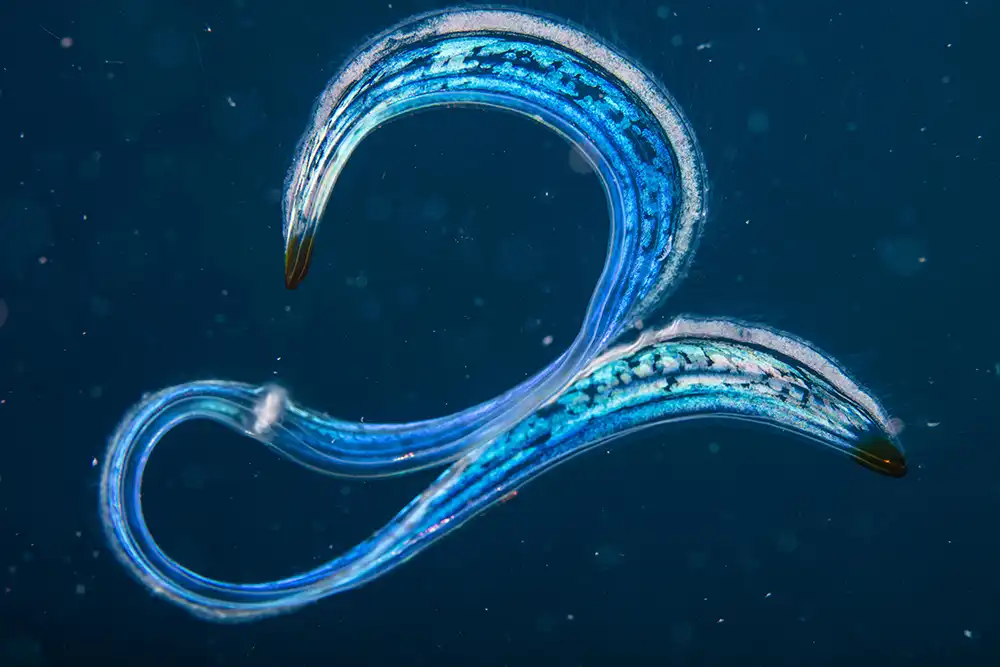
‘Through images and direct observations made during the NatGeo Pristine Seas scientific expedition in 2022, the hidden diversity of ctenophores in Colombia is revealed, recording for the first time several species of these gelatinous organisms in Caribbean and Pacific waters,’ she said.
‘The results fill a historical information gap on a key group of gelatinous plankton and demonstrate the value of non-invasive methodologies and explorations in remote areas to strengthen knowledge of marine biodiversity.’
The complete paper, ‘Lista comentada de los ctenóforos pelágicos en Colombia’ by Cristina Cedeño-Posso et al is published (in Spanish) in Revista de la Academia Colombiana de Ciencias Exactas, Físicas y Naturales.
Related articles
